1957 · Album
Jazz In 3/4 Time
Recorded 1959 · Mercury Records · Produced by Not attributed

Rhythm In Three: Max Roach's Waltz Experiment
Max Roach proves that jazz doesn't need four beats to swing hard and mean it.
Max Roach made this record because he wanted to see what happened when you took the waltz—that three-beat European form—and made it actually swing. Most jazz lives in four. Four is the heartbeat, the grid everyone knows. So Roach, already one of the most inventive drummers in the music, decided to build an entire album around three and see if it could breathe the same way. The answer is yes, though not without some friction. The record has an off-balance feeling that works, like walking on a ship's deck. You get your footing, then the rhythm shifts under you again.
What makes this work is that Roach doesn't treat the three-four time signature like a constraint or a gimmick. He digs into it, finds where the swing lives in those three beats, and his drumming becomes almost conversational—asking questions of the horn players, answering himself, exploring the corners of the meter instead of fighting it. The compositions sit somewhere between bebop and something more compositional, more arranged. This isn't just blowing changes; Roach has written these pieces with specific shapes and colors in mind. The tunes have character. They're not all successful—a few feel like they're straining against their own boundaries—but the best ones prove the concept worth pursuing.
This record sits in the middle of Roach's career, not at a peak but at a genuine point of curiosity. It's the work of a musician asking "what if?" rather than answering questions everyone's already asking. It won't be his most accessible album, and it's not the place to start if you're new to his work. But if you're already comfortable with Roach and want to hear him thinking differently, testing himself against unusual constraints, this deserves your attention. It's a record that still sounds like it's asking questions.
Who's playing
Where next?
More by Max Roach

We Insist! Max Roach's Freedom Now Suite 1961

Deeds, Not Words 1958

It's Time 1962
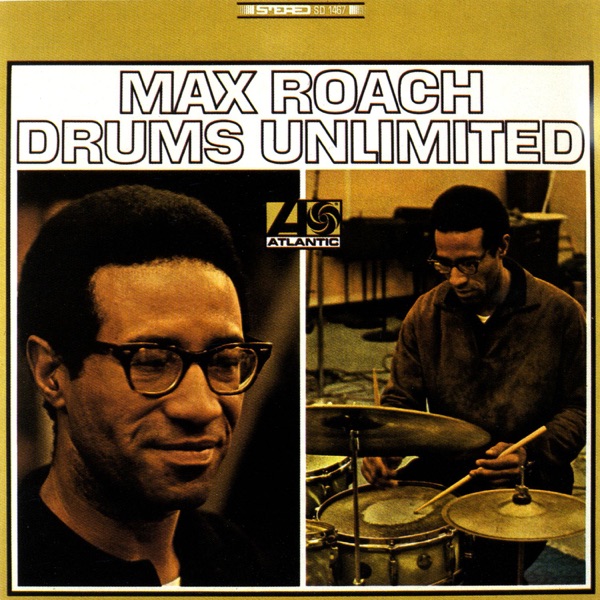
Drums Unlimited 1966
The musicians on this record

Way Out West 1957
Sonny Rollins
plays tenor saxophone here
plays tenor saxophone here

Quiet Kenny 1960
Kenny Dorham
plays trumpet here
plays trumpet here

Jam Session 1954
George Morrow
plays bass here
plays bass here


