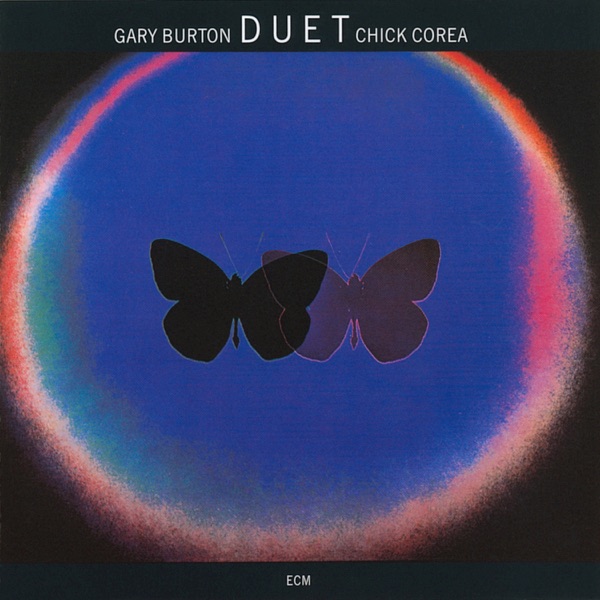
Two Voices in Perfect Conversation
Burton and Corea inspire each other through melodic, spontaneous improvising on this subtle, crystalline set.
The first thing you hear is space. Vibraphone and piano, but not crowding each other—Gary Burton's four mallets have a shimmer and decay that let Chick Corea's chords breathe underneath. The tempos drift. Sometimes they're searching, almost slow-motion, and sometimes they find a groove and ride it without pushing. There's no drummer keeping time, no bass walking underneath. It's just these two trading ideas, then doubling back, then splitting apart again. The recording is clean and dry—you can hear the mallets strike the bars, the piano's sustain pedal working—but it never feels clinical. ECM's production captures something that matters: two musicians genuinely listening to each other, not performing at you.
This is their second album together, recorded over three days in October 1978. By this point, both men had already built serious careers, but here they're working small and focused. There's no need to impress. A track can wander into territory neither of them planned, and that's the point. DownBeat gave it four stars, and reviewer Sam Freedman described it as "a beautiful collection of meditations, captured as though in crystal." AllMusic reviewer Scott Yanow noted the set's consistent inspiration, its melodic spareness, and the genuine spontaneity running through it.
If you're coming to this cold, it helps to understand what it's not: it's not a straight-ahead jazz date with someone keeping the beat. It's not a piano trio with the bass and drums removed. It's a conversation between two soloists who've decided to have it in real time, with nowhere to hide. Some listeners will find that meditative quality exactly what they need. Others might wish for more rhythm section underneath. That's not a flaw in the record—that's knowing whether this particular approach suits you.
Who's playing
Chick Coreapiano
Gary Burtonvibraphone
Where next?
More by Gary Burton
All 42 albums →


The musicians on this record
Their own records, close in time



