1987 · Album
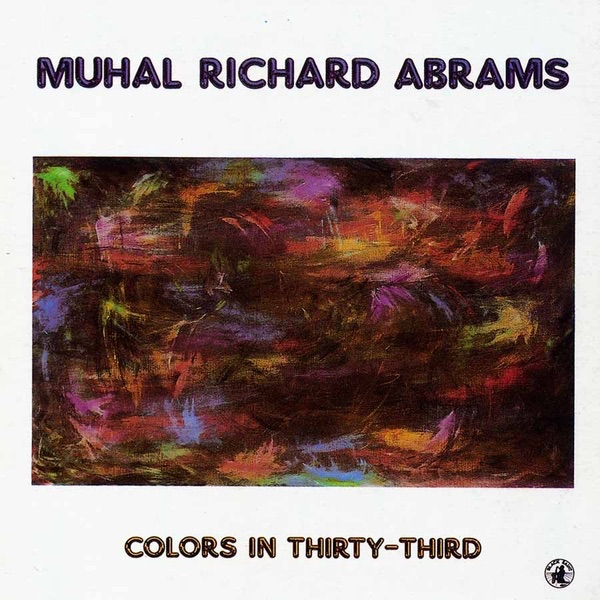
Colors in Thirty-Third
Recorded 1986 · Black Saint · Produced by Not specified in available sources
Abrams at Mid-Career: Seven Frames
Abrams constantly shifted the ensemble, letting composition shape personnel rather than the reverse.
By 1987, when Muhal Richard Abrams recorded Colors in Thirty-Third, he had spent decades building a reputation as both instrumentalist and conceptualist, yet this album marks a period when he was still actively shaping his voice through deliberate formal experiments. This isn't a debut or a late-career reflection—it's a working artist testing ideas, and that distinction matters. The session's central idea is structural rather than thematic: Abrams wrote seven pieces and varied the ensemble for each, moving between trio, quartet, quintet, and the full sextet that frames the title track and "Introspection." It's a composer's record disguised as a collaboration, though the musicians—John Blake, John Purcell, Dave Holland, Fred Hopkins, and Andrew Cyrille—are far from interchangeable. AllMusic's four-star review praised Abrams' ability to remain "an inspiring force as an instrumentalist and conceptualist," and the observation cuts to the point: the album works because Abrams doesn't disappear into the arrangements. He's present, responding, leading without dominating. Purcell in particular finds room to breathe across these shifting contexts, though the Penguin Guide rightly noted that everyone contributes meaningfully. This isn't a peak statement or a surprising turn. It's steady-handed work by someone who knew exactly what he wanted to explore and had the players to realize it.