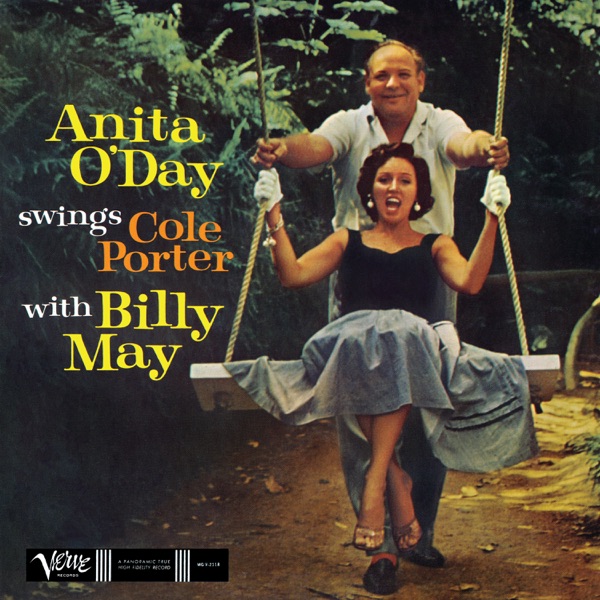
1960 · Album
Anita O'Day and Billy May Swing Rodgers and Hart
Recorded 1960 · Not specified in provided sources · Arranger: Billy May

Swing and Subtlety at the Peak
O'Day brought bop precision to Broadway, missing nothing while adding everything.
By 1960, Anita O'Day had already proven herself a singular voice in jazz—someone who could match bebop intensity with absolute clarity of phrasing. This album, arriving just a year after her Cole Porter collaboration with Billy May, finds her at the height of her powers, working with an arranger who understood her gifts completely. Where some singers might soften Rodgers and Hart to suit the material, O'Day and May did the opposite: they energized these songs without flattening them. The arrangements crackle and move, but they never trample the wordplay or melodic intelligence underneath.
AllMusic reviewer John Bush caught what makes this work. He noted that listeners might reasonably worry O'Day would overwhelm Hart's intricate lyrics and Rodgers' waltzing balladry, but what he heard instead was a singer performing with the kind of technical mastery and attention to detail you'd find in bop itself—think Charlie Parker or Dizzy Gillespie—who somehow added her own touches without calling attention to them. That balance between precision and personality is rare. The album swings hard, but it listens closely.
This sits closer to the center of O'Day's artistry than a departure or experiment. It's the sound of someone in full command of her instrument, paired with an arranger who knew exactly how to frame it. If you want to hear what made O'Day essential to jazz history, this is a better entry point than much of her earlier work. The Encyclopedia of Popular Music rated it 4 out of 5, and for good reason.
Who's playing
Ralph Peñadouble bass
Joe Castropiano
Al Hendricksonguitar
Chuck Gentrysaxophone
Justin Gordonsaxophone
Ted Nashsaxophone
Wilbur Schwartzsaxophone
Pete Candolitrumpet
Conrad Gozzotrumpet
Uan Raseytrumpet
Ed Kusbytrombone
Murray McEacherntrombone
Bill Schaefertrombone
Tommy Shepardtrombone
Irv Cottlerdrums