1959 · Album
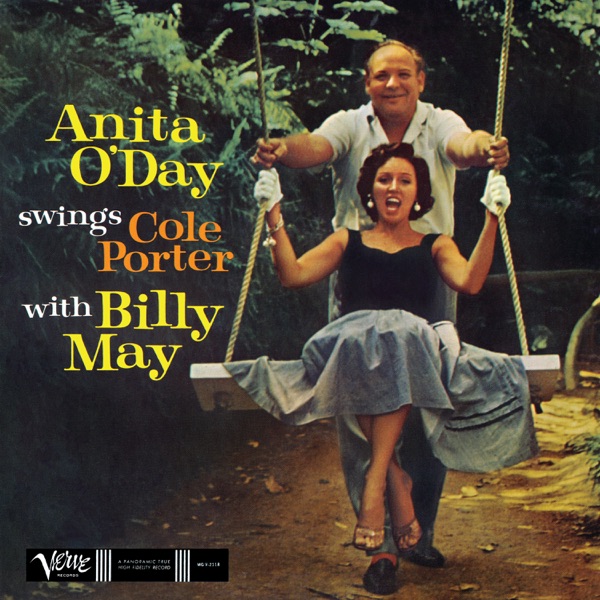
Anita O’Day Swings Cole Porter With Billy May
Recorded 1959 · Verve Records
Porter's Wit Meets O'Day's Swing
O'Day's voice cuts through May's lush arrangements with the sharpness of a knife through silk.
In 1959, Anita O'Day stepped into the studio to tackle Cole Porter's catalog with Billy May as arranger and conductor. May's approach was anything but restrained—he built orchestral settings that could have swallowed a lesser vocalist whole. But O'Day was built for this. Her phrasing was already rhythmically sophisticated enough to navigate dense harmonic writing without losing her distinctive bite, and May seemed to understand that his role was to frame her rather than overwhelm her. The arrangements swing hard, full of brass stabs and conversation between the band and her voice, yet they never crowd the space where she works best.
The album sits comfortably in O'Day's body of work as a sophisticated vocal jazz date—not quite a departure, since she'd been singing standards for years, but a particularly polished execution of that skill. She had moved away from the big-band world by this point and made herself a studio regular, and this project shows why: her timing and phrasing had only sharpened. AllMusic gave it four stars, recognizing the album's clean execution and genuine swing, while it earned a solid three-and-a-half-star rating from The Penguin Guide to Jazz Recordings. Porter's songs—clever, urbane, built for singers who could handle both lyrical complexity and melodic grace—played directly to her strengths.
This isn't a masterpiece that changed how people sang jazz, nor does it break any new ground in how standards get arranged. What it is: a genuinely well-made record where the singer, arranger, and material align almost perfectly. If you want to hear O'Day at her most controlled and placed within a big, swinging orchestral sound, this delivers exactly that.




