1965 · Album
And Then Again
Recorded 1959 · Riverside Records · Produced by Orrin Keepnews
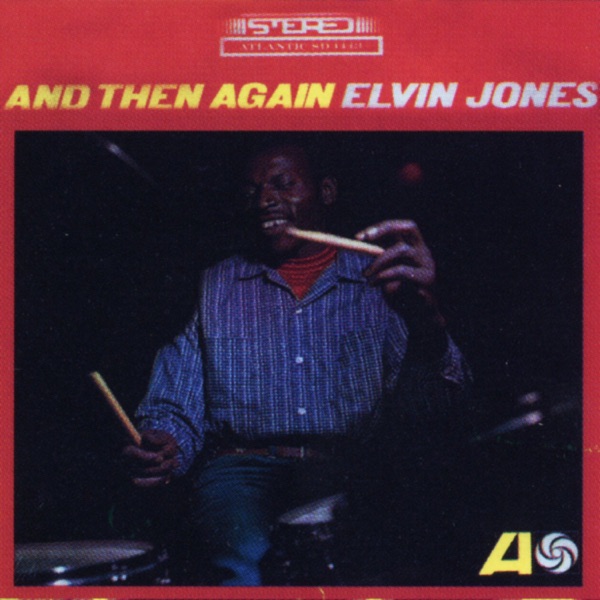
The Drummer's Statement in Motion
Elvin Jones demonstrates why the drums aren't keeping time—they're driving the conversation.
By the time Elvin Jones recorded And Then Again, he'd already established himself as one of jazz's most restless and inventive drummers, someone who could push a band forward without losing the music's center. This album finds him leading his own date, which means the session revolves entirely around his vision. What's immediately clear is that Jones isn't interested in neat, predictable grooves. His playing here is busy in the best sense—always moving, always suggesting new directions, keeping everyone else honest.
The band sounds hungry and responsive. Jones doesn't play drums like a metronome; he plays like someone having a conversation, asking questions through his cymbal work and snare, answering back with his bass drum. The tunes themselves are straightforward enough, but the approach is anything but. There's real interplay happening, real listening. The rhythm section locks in when it needs to, but there's also plenty of space for exploration. This isn't a showcase where the drummer sits in the background; these are group conversations where the drums are leading the argument.
For someone exploring Jones's work, this is a good entry point if you want to hear him thinking through the music rather than just executing a set vision. It's not his most famous recording—that would come later—but it's honest work that shows why he became such an essential figure in the music. The album doesn't pretend to be more than it is: a capable band playing hard, with one of jazz's best drummers pushing them toward something real. It's the kind of record that rewards repeated listening because there's always another detail in Jones's playing you didn't catch before.
Who's playing
Paul Chambersbass
Art Davisbass
Don Friedmanpiano
Hank Jonespiano
Charles Davisbaritone saxophone
J.J. Johnsontrombone
Elvin Jonesdrums
Frank Wesswoodwind
Thad Jonescornet
Where next?
More by Elvin Jones
All 13 albums →


The musicians on this record
Their own records, close in time