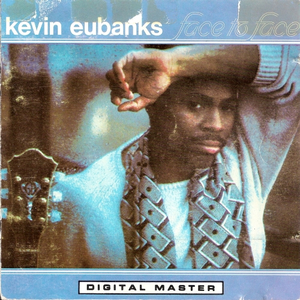
More Than the Sideman Smiled
Kevin Eubanks came up in a musical family — his uncle is the vibraphonist Ray Bryant — and you can hear that grounding in the way he approaches even the most electric settings with a certain melodic patience. He studied at Berklee College of Music in Boston and came out with a vocabulary that was broad from the start: he could play acoustically with real delicacy, and he could plug in and get gritty without losing his harmonic sophistication. That combination is rarer than it sounds.
His early records for Elektra Musician in the 1980s are worth tracking down. Albums like Guitarist (1982) and Opening Night (1985) show a player who wasn't trying to be the next Pat Metheny or the next John Scofield — he was somewhere in between, with a warmer midrange tone and a tendency to let phrases breathe rather than fill every bar. There's an almost conversational quality to his phrasing that becomes his signature across every context he works in.
The Tonight Show years, from 1992 to 2010, were genuinely complicated for his artistic reputation. He was great at the job — loose, funny, musically agile enough to underscore comedy bits and then pivot to actual jazz — but the visibility came with assumptions. A lot of jazz listeners filed him under television musician and moved on. Meanwhile, he kept making records, kept working with serious players, and kept developing. The Tonight Show gig paid the bills and kept him in front of millions of people who had never thought about a guitar solo in their lives, which is not nothing.
After leaving The Tonight Show he released Romantic Warrior (2011) on his own label, and it felt like a deliberate statement — here is what I actually sound like when the cameras aren't rolling. The record leans into his interest in blending acoustic and electric textures, and it has a reflective, unhurried quality that rewards patient listening. He's not trying to prove anything flashy; he's more interested in the arc of a whole piece than in isolated moments of virtuosity.
What you get with Eubanks, across all of it, is a guitarist who genuinely loves the instrument in its full range rather than one corner of it. He's comfortable with blues feeling, comfortable with harmonic complexity, comfortable with silence. If you go in expecting fireworks you might be surprised at how much he's willing to just lay back and support a melody. That restraint is a choice, and once you recognize it as a choice rather than a limitation, the music opens up considerably.