The Voice That Stays
Before you press play, know this: Dianne Reeves is not a nostalgia act. She is not reverently preserving a museum version of jazz singing. She absorbed the classic lineage — Sarah Vaughan, Carmen McRae, Betty Carter — and then pushed past it toward something more personal and harder to pin down. Her phrasing is rhythmically alive in a way that keeps even familiar standards feeling slightly unpredictable, like she might take a different turn than you expect, and usually she does.
She came up through the Los Angeles scene in the late 1970s and early 1980s, a rich environment where jazz, R&B, and fusion were all in conversation. She worked with Billy Childs and spent formative time with Harry Belafonte's band, an experience that broadened her sense of what a vocalist could do stylistically and politically. By the time she began recording as a leader, she had the kind of seasoning that usually takes decades — an ability to shape a performance rather than just deliver one.
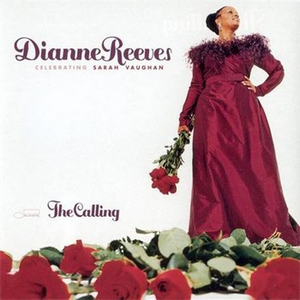
Her Blue Note period, running through the 1990s and into the 2000s, produced the records most people know first. Art and Survival (1994) and The Calling: Celebrating Sarah Vaughan (2001) show the range of what she was after — one rooted in original material with a contemporary edge, the other a tribute that manages to honor its subject without becoming imitation. Good Night, and Good Luck (2005), the soundtrack she recorded for George Clooney's film, introduced her to a wider audience and earned her a Grammy, but it is a fairly conservative set by her own standards.
What makes Reeves distinctive is her relationship with space and rhythm. She does not oversing, even when her voice would clearly allow it. She understands that a well-placed rest or a slightly delayed entrance can carry more emotional weight than any run or flourish. When she does open up — and she does, particularly live — it feels earned rather than showy. Her scat singing draws from the bebop tradition but has a looser, more conversational quality, almost as if she is thinking out loud in a musical language.
If you are coming in fresh, Quiet After the Storm (1994) is a good first record — it has warmth, excellent playing from her regular collaborators, and a sense of a singer fully in command of her material without being self-congratulatory about it. From there, live recordings will show you another dimension entirely. She is one of those artists who uses the stage to take risks that the studio sometimes smooths over, and that live Dianne Reeves — looser, more daring, occasionally surprising even herself — is where the full picture comes into focus.