Where do you listen?
Choose your streaming service
inside the sleeve
Loading…
inside the sleeveITS
⌕
Read About
Bass - USA - Post-Bop

Chuck
Israels

1936 - present, New York, USA

Chuck Israels is best known as the bassist who succeeded Scott LaFaro in the Bill Evans Trio, one of the most daunting chairs in jazz history — and he held it with quiet authority for nearly a decade. What makes that story interesting is that Israels didn't try to replicate LaFaro's mercurial brilliance; he brought his own melodic intelligence and architectural sense of time. Beyond the Evans years, he built a second career as a composer, arranger, and educator that has shaped far more musicians than most listeners realize.

Post-Bop
Chuck Israels

Steady Hand, Open Ear

When Scott LaFaro died in a car accident in 1961, the Bill Evans Trio lost something irreplaceable — a bassist who treated the instrument as a co-soloist, who blurred the line between rhythm and melody in ways nobody had quite heard before. Evans took nearly a year away from performing before reconvening with a new group, and the man he chose to anchor it was Chuck Israels. That choice said something. Israels wasn't being hired to imitate a ghost; he was being hired because he could think, listen, and hold space for one of the most harmonically complex pianists in the music.

Israels brought a different kind of presence to the trio. Where LaFaro could feel airborne, Israels was rooted — not rigid, but grounded in a way that gave Evans's explorations a reliable floor. His tone was full and warm, his time flexible without being elastic to the point of floating away. You can hear this on Town Hall Concert (1966) and across the studio recordings of that mid-sixties period: a bassist who understood that serving the music sometimes means stepping back, and other times means offering a counter-melody that nudges the whole conversation in a new direction.

What's easy to overlook is that Israels came to the Evans Trio already well-formed. He had worked with Billie Holiday late in her career, played with Eric Dolphy, and studied composition formally — an unusual combination of street experience and academic rigor. That background gave him a broader frame than the average sideman. He wasn't just learning on the job; he was applying a considered musical philosophy every night.

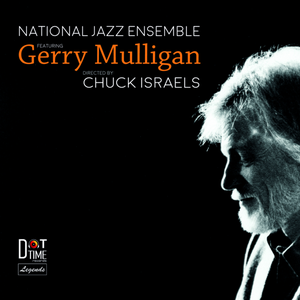
After leaving the Evans Trio in the late 1960s, Israels pivoted significantly toward large ensemble writing and education. He founded the National Jazz Ensemble in the 1970s, an orchestra dedicated to performing and preserving jazz repertoire with the same seriousness classical organizations bring to their canons. It was an ambitious and somewhat contrarian project at a time when jazz was fragmenting in a dozen directions at once. The ensemble produced careful, well-crafted performances of works by Duke Ellington, Charles Mingus, and others, and while it never became a household name, it represented a genuine commitment to the idea that jazz had a literature worth curating.

Israels spent decades teaching at Western Washington University, training generations of players who may not know his recordings but absorbed his ideas about harmony, rhythm, and ensemble listening. His legacy is genuinely split: one half belongs to those Evans recordings that any serious listener will eventually find their way to, and the other half lives in classrooms and rehearsal halls, passed on through students who learned to hear music the way he does — carefully, structurally, and with patience for the spaces between the notes.
Facts
Born1936, New York, USA
InstrumentDouble bass
Active1950s – present
Known forBill Evans Trio (1961–1966), National Jazz Ensemble, jazz education
Connections
Bill EvansLeader, New York
→
Scott LaFaroPredecessor in Bill Evans Trio, New York
→
Eric DolphyCollaborator, New York
→
Read more

Discography

13 records
Eindhoven Concert
Eindhoven Concert
1959
♫
Monk Suite
1981
Live at the New School
Concerto Peligroso
Concerto Peligroso
♫
What's New (Bonus Track Version)
Convergence
Convergence
Garden of Delights
Garden of Delights
It's Nice to Be With You
Second Wind: A Tribute to the Music of Bill Evans
Chuck Israels And The Metropole Orchestra Featuring Claudio Roditi (The Eindhoven Concert)
Chuck Israels and the Metropole Orchestra
Joyful Noise: The Music of Horace Silver
♫
National Jazz Ensemble (1975-1976)

Collaborations

Live on Youtube

Explore Further

Selected connections
Album, 1966
Town Hall Concert
One of the clearest documents of the Israels-era Evans Trio, recorded live and showing what their working relationship actually sounded like.
Explore →
Pianist, USA
Bill Evans
The natural starting point — hear the trio recordings Israels anchored and understand the musical world he inhabited.
Explore →

Who's playing
Listen next
Recording Info
Track listing
Musicians
Further Reading
Read more

Where next?

More by this artist

Albums with the same musicians

From the same era

Similar artists

inside the sleeve
Growing
Jazz, explained without pretension.
Read · Follow the connections · Press play
Right now: 7,100+ albums · 440+ artists
Start here
New to jazz? These artists are good places to start.
Loading…
Explore
Nine records worth getting lost in.
Born today
Album of the day
A landmark record, every day.
Read
  • Loading…
Article archive →
Recently added
Purpose
Inside the Sleeve is your companion on a journey through jazz — not a textbook, but something closer to a knowledgeable friend sitting next to you while you listen. Read about an artist, press play, follow a connection, discover an album you didn't know you needed.
Suggestions
Read

Articles

Essays, guides, and lists about jazz and the records that matter.

Loading…

Genre

Key Artists
Further Reading

Essential Albums

Related Genres

In This Genre

About

Inside the Sleeve

Work in progress

Inside the Sleeve grows continuously — new artists and albums are added, essays refined, as visitors explore and our editors follow up on what they find. Content, features, and design are still evolving; use the Report error button on any page to flag something that seems off.

Content

Every artist, album, and release date on Inside the Sleeve is real — verified against trusted sources including MusicBrainz and Wikipedia. We don't invent discographies or fabricate records. AI compiles that verified information into readable prose — essays on artists, albums, and the music itself. We can't manually review every essay before publishing, but every reported error is checked by a human editor.

Inside the Sleeve is not a review site. We're not here to rate or rank — we're here to guide you in. Where an album stands out, we'll say so. Where an artist changed everything, you'll know why. But we won't tear anything down. Jazz history is complex and sources sometimes disagree — if you spot something that seems off, please report it.

Streaming

Inside the Sleeve links to Spotify and Apple Music so you can listen while you read. These are not affiliate links. For Spotify, links open a search on open.spotify.com — we do not have direct links to specific recordings. For Apple Music, direct links are used where available, otherwise a search is opened.

Your choice of streaming service is stored locally in your browser only. It is never sent to our servers.

We're working on deeper Spotify integration, including direct links to specific recordings.

Privacy

Inside the Sleeve does not collect personal data and does not use cookies. We count page visits anonymously using a self-hosted analytics tool — no personal identifiers are stored, and the data never leaves our own server. The only preference stored on your device is your streaming service choice, saved locally in your browser and never transmitted.

When you submit a suggestion or error report, the text you write is stored in our database. No name or email is required or collected unless you choose to provide one.

Third-party services

Spotify and Apple Music are independent services with their own terms of use and privacy policies. Inside the Sleeve is not affiliated with or endorsed by either company.

Support

Inside the Sleeve is free and ad-free. If you enjoy it, a coffee helps cover server costs and keeps the project going.

Amazon

Some book recommendations on Inside the Sleeve link to Amazon. Buying through these links costs you nothing extra — but Amazon pays us a small commission, which goes directly towards keeping the site running. It's a simple way to support the project if you were going to buy the book anyway.

As an Amazon Associate, Inside the Sleeve earns from qualifying purchases.

Questions or feedback? Use the suggestion box on the front page.

Inside the Sleeve — A guide for those who want to go beyond the obvious About & Privacy