1926 · Album
The Pianist and Composer - Volume 1
Recorded 1926 · Gennett Records · Produced by Not documented
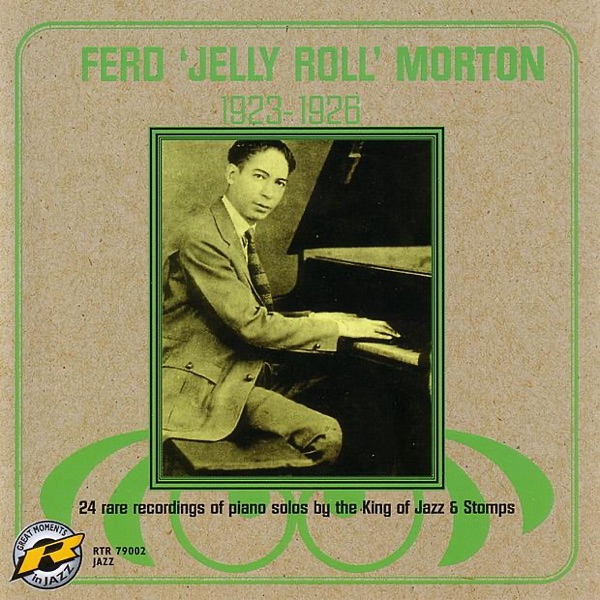
Where Jazz Learned to Write Itself Down
Morton proved that written arrangements could capture jazz's soul without killing its swing.
These are piano solos and small ensemble recordings where you hear a man thinking in real time—syncopated, restless, building momentum from silence. Jelly Roll Morton plays with a rolling left hand and a right hand that darts ahead of the beat, then catches it, then plays around it. The piano has weight here, not just decoration. When horns enter, they don't compete; they confirm what the piano already suggested. The mood shifts track to track—some pieces stride and swagger, others ache with minor-key blues feeling, and a few seem to be working out an idea he'll finish later.
Morton was jazz's first great composer-arranger, and this collection captures him at the center of that invention. His published composition "Jelly Roll Blues" appeared in 1915, years before most jazz musicians thought to write anything down at all. What matters here is not just the tunes themselves but how he orchestrated small groups to play them—stopping solos short to shift the color, trading phrases between piano and clarinet, building architecture where others were still improvising by ear. He wasn't rejecting spontaneity; he was controlling it.
This is an essential record if you want to understand how jazz became a composed music without losing its improvised soul. It's not background music. It demands attention, rewards it, and sounds nothing like what came after because it showed what came after how to sound.


