1984 · Album
Telephone
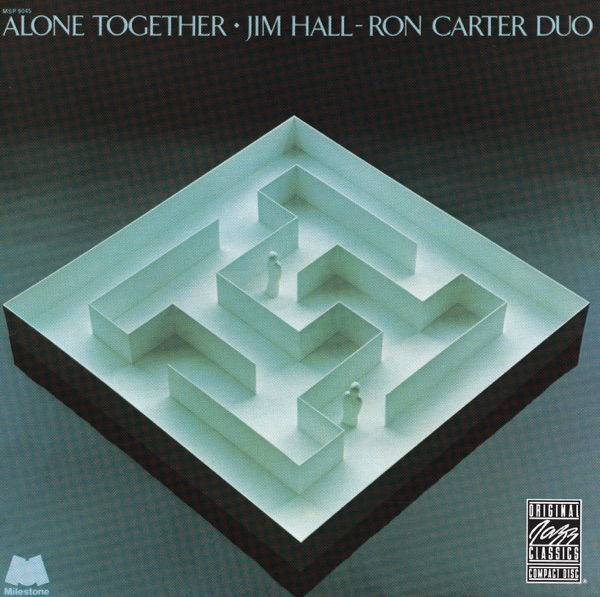
Recorded 1984, Concord Pavilion · Concord Jazz · Personnel: [Jim Hall] (guitar), [Ron Carter] (bass)
Two Voices in Conversation, Live and Unguarded
Hall and Carter talk to each other like old friends who've run out of small talk and gotten honest.
By 1984, Jim Hall had already spent three decades proving himself one of jazz's most thoughtful guitarists, and this live date with bassist Ron Carter finds him in a place of hard-won confidence. There's no need to prove anything here—just two musicians at the top of their powers, playing a program that lets them listen to each other without distraction. The stripped-down instrumentation—guitar and bass only—is both constraint and liberation. Hall's tone is warm and articulate, his lines conversational rather than flashy. Carter's walking is solid but never merely functional; he's thinking harmonically, sometimes leading, sometimes following, always responsive. They trade ideas on standards and originals with the ease of players who understand that the best conversations don't require anyone to dominate. Tracks like the title piece show Hall's ability to build narrative from minimal material, letting silence do as much work as sound. This isn't a record of technical display or stylistic innovation. It's evidence of a musician comfortable enough to play simply, which turns out to be harder than playing impressively. For listeners already familiar with Hall's work, this captures him at a moment when maturity meant clarity rather than simplification. If you're new to him, start with something earlier—his Blue Note work has more varied textures. But for anyone who understands what Hall was about, Telephone is proof that he never stopped listening.
Where next?
More by Jim Hall
All 46 albums →