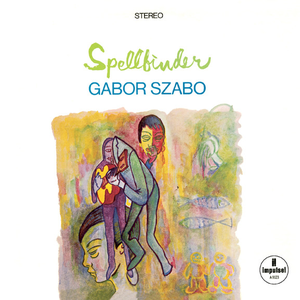
1966 · Album
Spellbinder (LPR. Int'l Jewel Version)
Recorded 1966 · Impulse! · Produced by Bob Thiele
Szabo's Hypnotic Guitar Cast a Spell
Szabo's guitar work here is patient, lyrical, and absolutely convincing in its restraint.
Gabor Szabo came to jazz through an unusual path — Hungarian-born, classically trained, arriving in America with a gift for melody and an appetite for experimentation. By the time he recorded Spellbinder, he had already established himself as a distinctive voice on the guitar, someone uninterested in speed or flash but deeply committed to tone and phrasing. This album sits somewhere in the middle of his career, after he'd found his voice but before the commercial success that would follow in the next decade.
What makes this record work is its restraint. Szabo's guitar work is patient and lyrical, never rushing, never trying to prove anything. The interplay between guitar and the rest of the ensemble feels like a conversation between people who trust each other — there's space to breathe, silence that matters as much as sound. The tunes themselves are accessible without being simple; they stick in your head without feeling like they're trying too hard. This is Szabo doing what he does best: finding the emotional weight in a melody and exploring it from multiple angles without ever sounding academic about it.
The Jewel version you're holding is the one that circulated most widely, and for good reason. It's the kind of album that rewards repeat listening — not because it's complex in a technical sense, but because there's genuine feeling underneath the surface. If you're looking for where Szabo fits in the broader jazz landscape, this is a solid entry point. It's not his wildest work, nor is it trying to be. It's simply a guitarist in command of his instrument, playing music that means something to him.