Where do you listen?
Choose your streaming service
inside the sleeve
Loading…
inside the sleeveITS
⌕
Read About

♫

Facts
Connections
Read more

Discography

Collaborations

Live on Youtube

Explore Further

Selected connections
1970 · Album

Ptah, the El Daoud

↑ Alice Coltrane

Recorded 1970 · Impulse! · Produced by Alice Coltrane
Ptah, the El Daoud

Divine Music From a Cosmic Harpist

Alice Coltrane's harp floats over organ and strings like prayer made audible.

By the time Alice Coltrane recorded Ptah, the El Daoud (1966), she had already established herself as a serious composer and bandleader, but this album represents something different from her earlier work. Where her previous records leaned toward straightforward spiritual jazz with recognizable song structures, this one operates in a more abstract space—part devotional music, part experimental soundscape. The harp, her primary voice here, becomes something otherworldly in Alice's hands, plucking out melodies that seem to exist just outside conventional harmony. Pharoah Sanders on tenor saxophone drifts through these pieces like a voice in a cathedral, his tone reedy and questioning. The rhythm section of Jimmy Garrison on bass and Rashied Ali on drums keeps things grounded, but loosely—there's space everywhere, room for the music to breathe and surprise you.

The tracks here aren't really songs in the traditional sense. "Ptah, the El Daoud" opens with sustained organ tones that feel almost clinical before the harp enters, and the whole thing unfolds more like a ritual than a performance. "Ra" features Sanders at his most searching, circling around the harmonic spaces Alice creates. What makes this album distinct is how seriously Alice commits to creating atmosphere and mood rather than showcasing virtuosity. She could dazzle listeners with technical display, but instead she chooses restraint, letting silence do as much work as sound.

This isn't the record to start with if you want to hear Alice Coltrane at her most accessible. It's demanding, occasionally austere, and definitely not everyone's cup of tea. But for listeners willing to meet it halfway, it's one of the most genuinely spiritual albums in jazz—not in a sentimental way, but as an actual attempt to translate inner experience into sound. It's a late-period work that shows an artist still pushing herself into new territory.

Who's playing
Ron Carterdouble bass
Alice Coltranepiano
Joe Hendersontenor saxophone
Pharoah Sanderstenor saxophone
Ben Rileydrums
Listen next
By Alice Coltrane
Journey in Satchidananda 1971
Pharoah Sanders's own record
Karma 1969
Pharoah Sanders plays tenor saxophone here
More Spiritual Jazz
New Grass 1969
Albert Ayler
Recording Info
Track listing
1Ptah, the El Daoud13:58
2Turiya and Ramakrishna8:19
3Blue Nile6:58
4Mantra16:33
Musicians
Further Reading
Read more

Where next?

More by Alice Coltrane
Journey in Satchidananda 1971
World Galaxy 1972
A Monastic Trio 1968
All 4 albums →
The musicians on this record
Karma 1969
Pharoah Sanders
plays tenor saxophone here
Power To The People 1969
Joe Henderson
plays tenor saxophone here
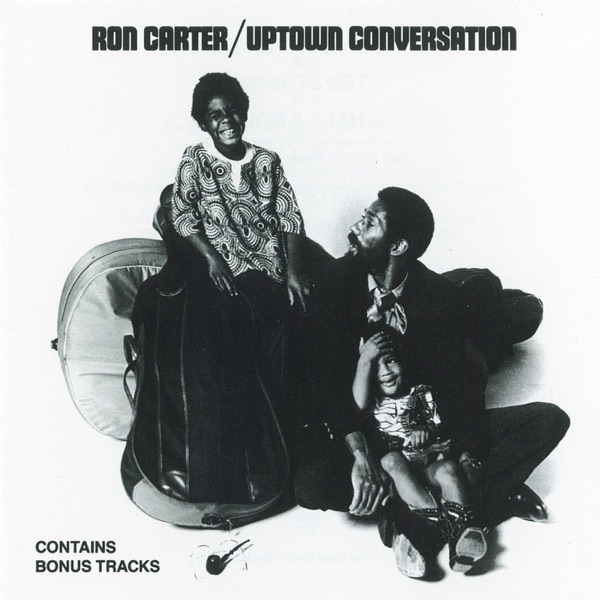
Uptown Conversation 1969
Ron Carter
plays double bass here
Their own records, close in time
More Spiritual Jazz
New Grass 1969
Albert Ayler
A Love Supreme 1965
John Coltrane
The Real McCoy 1967
McCoy Tyner
The Avant-Garde 1966
Don Cherry
All 68 Spiritual Jazz artists →

More by this artist

Albums with the same musicians

From the same era

Similar artists

inside the sleeve
Growing
Jazz, explained without pretension.
Read · Follow the connections · Press play
Right now: 7,100+ albums · 440+ artists
Start here
New to jazz? These artists are good places to start.
Loading…
Explore
Nine records worth getting lost in.
Born today
Album of the day
A landmark record, every day.
Read
  • Loading…
Article archive →
Recently added
Purpose
Inside the Sleeve is your companion on a journey through jazz — not a textbook, but something closer to a knowledgeable friend sitting next to you while you listen. Read about an artist, press play, follow a connection, discover an album you didn't know you needed.
Suggestions
Read

Articles

Essays, guides, and lists about jazz and the records that matter.

Loading…

Genre

Key Artists
Further Reading

Essential Albums

Related Genres

In This Genre

About

Inside the Sleeve

Work in progress

Inside the Sleeve grows continuously — new artists and albums are added, essays refined, as visitors explore and our editors follow up on what they find. Content, features, and design are still evolving; use the Report error button on any page to flag something that seems off.

Content

Every artist, album, and release date on Inside the Sleeve is real — verified against trusted sources including MusicBrainz and Wikipedia. We don't invent discographies or fabricate records. AI compiles that verified information into readable prose — essays on artists, albums, and the music itself. We can't manually review every essay before publishing, but every reported error is checked by a human editor.

Inside the Sleeve is not a review site. We're not here to rate or rank — we're here to guide you in. Where an album stands out, we'll say so. Where an artist changed everything, you'll know why. But we won't tear anything down. Jazz history is complex and sources sometimes disagree — if you spot something that seems off, please report it.

Streaming

Inside the Sleeve links to Spotify and Apple Music so you can listen while you read. These are not affiliate links. For Spotify, links open a search on open.spotify.com — we do not have direct links to specific recordings. For Apple Music, direct links are used where available, otherwise a search is opened.

Your choice of streaming service is stored locally in your browser only. It is never sent to our servers.

We're working on deeper Spotify integration, including direct links to specific recordings.

Privacy

Inside the Sleeve does not collect personal data and does not use cookies. We count page visits anonymously using a self-hosted analytics tool — no personal identifiers are stored, and the data never leaves our own server. The only preference stored on your device is your streaming service choice, saved locally in your browser and never transmitted.

When you submit a suggestion or error report, the text you write is stored in our database. No name or email is required or collected unless you choose to provide one.

Third-party services

Spotify and Apple Music are independent services with their own terms of use and privacy policies. Inside the Sleeve is not affiliated with or endorsed by either company.

Support

Inside the Sleeve is free and ad-free. If you enjoy it, a coffee helps cover server costs and keeps the project going.

Amazon

Some book recommendations on Inside the Sleeve link to Amazon. Buying through these links costs you nothing extra — but Amazon pays us a small commission, which goes directly towards keeping the site running. It's a simple way to support the project if you were going to buy the book anyway.

As an Amazon Associate, Inside the Sleeve earns from qualifying purchases.

Questions or feedback? Use the suggestion box on the front page.

Inside the Sleeve — A guide for those who want to go beyond the obvious About & Privacy