Four Musicians Finding Their Way Through the Night
Kühn's piano floats over a rhythm section that breathes and shifts, never settling into predictable grooves.
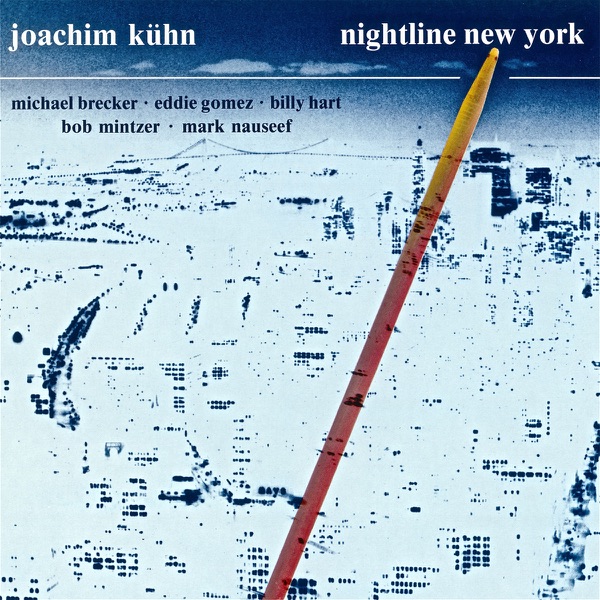
Nightline New York opens with a kind of urban restlessness — Kühn's piano lines are intricate and probing, skating across changes while Eddie Gomez on bass anchors the sound with fluid, melodic weight. Billy Hart and Mark Nauseef on percussion create layers rather than a traditional drummer-and-timekeeper setup; the drums don't just keep time, they converse. There's space here, room for the music to move sideways.
Kühn was working through his own synthesis at this point — he'd crossed between European classical training and the improvisational demands of American jazz, and this recording captures him in that liminal space. The tunes don't announce themselves with obvious heads or sing-song melodies. Instead they emerge from the playing itself, shaped by how the four voices trade and complement each other. Gomez is particularly valuable here, never busy but always present, his tone warm enough to anchor passages that could otherwise drift.
This isn't a debut — Kühn had already recorded under his own name — but it feels like a statement of intent, a document of a working band finding its vocabulary. It's piano-trio jazz with a fourth voice, which changes everything about balance and texture. The album doesn't announce itself as essential, but for anyone interested in how European pianists absorbed American jazz language while keeping something distinctly their own, this is direct evidence of the process.
Who's playing
Where next?
More by Joachim Kühn
All 36 albums →


The musicians on this record
Their own records, close in time