Where do you listen?
Choose your streaming service
inside the sleeve
Loading…
inside the sleeveITS
⌕
Read About

♫

Facts
Connections
Read more

Discography

Collaborations

Live on Youtube

Explore Further

Selected connections
1964 · Album

My Funny Valentine

↑ Miles Davis

Recorded February 12, 1964 · Columbia
My Funny Valentine

Miles Davis Reimagines Romance in Silence

In the hushed spaces between notes, Davis finds the truest expression of love's complexity.

My Funny Valentine is one of those albums that just hits differently. Released in 1964, Miles Davis made something really special here—a record that shows him stepping back from all the fast modal stuff and the aggressive hard-bop he'd been doing, and instead just sitting with a single song. And not just any song, but "My Funny Valentine," which is honestly one of the most beautiful melodies ever written.

What makes this work so well is how little Davis does. He doesn't try to impress you with fancy playing or show off what his trumpet can do. Instead, he plays the melody like he's singing it—warm, a little broken, letting you hear exactly what he's feeling. His tone is so human on this record. You can hear something in it, like he's thinking about all the contradictions in love at the same time: how you can adore someone and also see their flaws, how presence and absence somehow matter equally.

The band catches onto this approach immediately. They're not trying to build anything complicated harmonically or create wall-to-wall sound. It's more like a small group of people in a room, playing carefully and listening to each other. The space between the notes matters as much as the notes themselves. There's room to breathe.

This album also matters because it shows you where Miles was heading. He was done with all that ensemble experimenting for a moment, pulling back into something more personal and direct. You can hear hints of what he'd explore later with Gil Evans, but this record stands completely on its own. It's a reminder that sometimes the most powerful thing you can do in music is know when to hold back.
Who's playing
Listen next
By Miles Davis
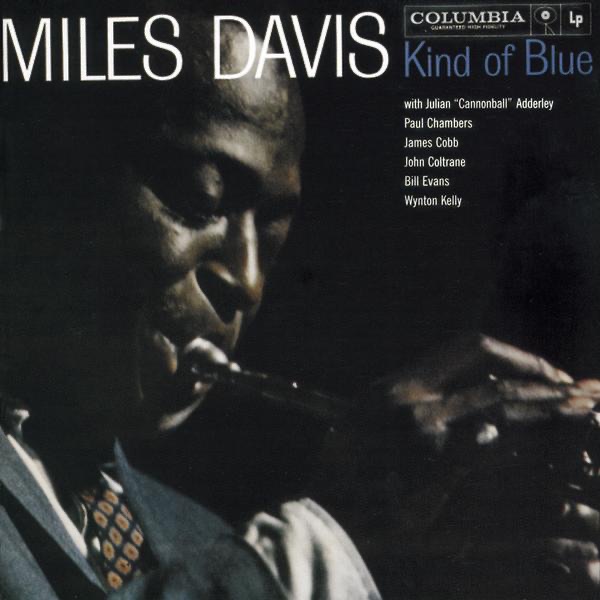
Kind of Blue 1959
More Modal Jazz
Speak No Evil 1965
Wayne Shorter
Recording Info
Track listing
1My Funny Valentine
Musicians
Further Reading
Read more

Where next?

More by Miles Davis
Kind of Blue 1959
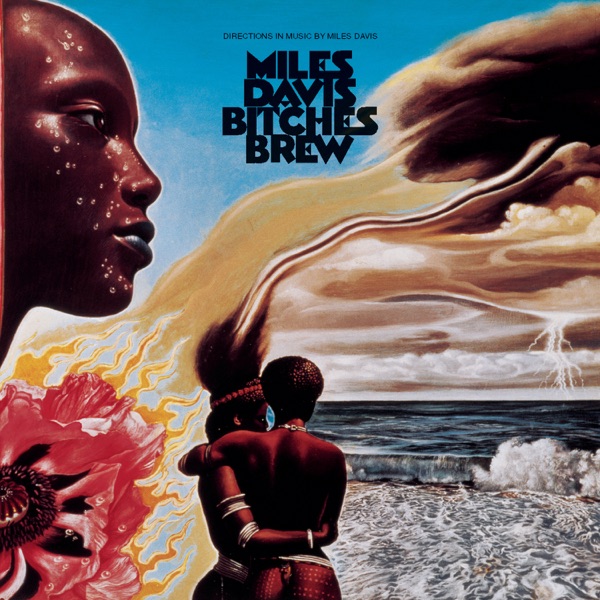
Bitches Brew 1970
Sketches of Spain
Birth of the Cool 1950
All 59 albums →
More Modal Jazz
Speak No Evil 1965
Wayne Shorter
The Impulse Story 1961
McCoy Tyner
A Love Supreme 1965
John Coltrane
Portrait in Jazz 1960
Bill Evans
All 42 Modal Jazz artists →

More by this artist

Albums with the same musicians

From the same era

Similar artists

inside the sleeve
Growing
Jazz, explained without pretension.
Read · Follow the connections · Press play
Right now: 7,100+ albums · 440+ artists
Start here
New to jazz? These artists are good places to start.
Loading…
Explore
Nine records worth getting lost in.
Born today
Album of the day
A landmark record, every day.
Read
  • Loading…
Article archive →
Recently added
Purpose
Inside the Sleeve is your companion on a journey through jazz — not a textbook, but something closer to a knowledgeable friend sitting next to you while you listen. Read about an artist, press play, follow a connection, discover an album you didn't know you needed.
Suggestions
Read

Articles

Essays, guides, and lists about jazz and the records that matter.

Loading…

Genre

Key Artists
Further Reading

Essential Albums

Related Genres

In This Genre

About

Inside the Sleeve

Work in progress

Inside the Sleeve grows continuously — new artists and albums are added, essays refined, as visitors explore and our editors follow up on what they find. Content, features, and design are still evolving; use the Report error button on any page to flag something that seems off.

Content

Every artist, album, and release date on Inside the Sleeve is real — verified against trusted sources including MusicBrainz and Wikipedia. We don't invent discographies or fabricate records. AI compiles that verified information into readable prose — essays on artists, albums, and the music itself. We can't manually review every essay before publishing, but every reported error is checked by a human editor.

Inside the Sleeve is not a review site. We're not here to rate or rank — we're here to guide you in. Where an album stands out, we'll say so. Where an artist changed everything, you'll know why. But we won't tear anything down. Jazz history is complex and sources sometimes disagree — if you spot something that seems off, please report it.

Streaming

Inside the Sleeve links to Spotify and Apple Music so you can listen while you read. These are not affiliate links. For Spotify, links open a search on open.spotify.com — we do not have direct links to specific recordings. For Apple Music, direct links are used where available, otherwise a search is opened.

Your choice of streaming service is stored locally in your browser only. It is never sent to our servers.

We're working on deeper Spotify integration, including direct links to specific recordings.

Privacy

Inside the Sleeve does not collect personal data and does not use cookies. We count page visits anonymously using a self-hosted analytics tool — no personal identifiers are stored, and the data never leaves our own server. The only preference stored on your device is your streaming service choice, saved locally in your browser and never transmitted.

When you submit a suggestion or error report, the text you write is stored in our database. No name or email is required or collected unless you choose to provide one.

Third-party services

Spotify and Apple Music are independent services with their own terms of use and privacy policies. Inside the Sleeve is not affiliated with or endorsed by either company.

Support

Inside the Sleeve is free and ad-free. If you enjoy it, a coffee helps cover server costs and keeps the project going.

Amazon

Some book recommendations on Inside the Sleeve link to Amazon. Buying through these links costs you nothing extra — but Amazon pays us a small commission, which goes directly towards keeping the site running. It's a simple way to support the project if you were going to buy the book anyway.

As an Amazon Associate, Inside the Sleeve earns from qualifying purchases.

Questions or feedback? Use the suggestion box on the front page.

Inside the Sleeve — A guide for those who want to go beyond the obvious About & Privacy