1988 · Album
Live at the Montmartre
Recorded 1983, Montmartre Jazz Club, Copenhagen · Storyville · Produced by Not credited
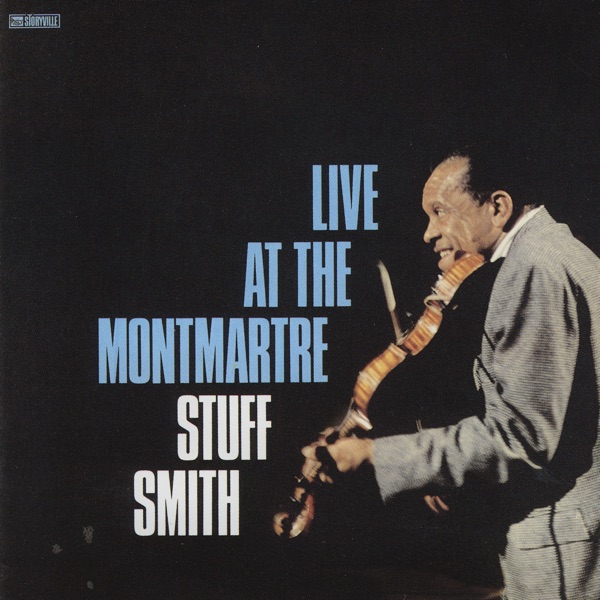
Violin Swinging in a Copenhagen Club
Smith's violin sings and growls over a rhythm section that locks in tight, no pretense, just swing.
From the first notes, you're in a small room with a violin cutting through the dark. Stuff Smith plays with urgency and humor — his tone isn't smooth or classical, it's rough, bent, alive. Kenny Drew on piano and the rhythm section of Niels-Henning Ørsted Pedersen on bass and Alex Riel on drums move together like they've done this a hundred times, which they likely had. The Montmartre in Copenhagen was a regular stop, and it shows: everyone knows exactly where they're going.
This is Smith late in his career, still burning. His violin can sound like a horn one moment and then crack into something almost vocal the next, and he uses that range to keep things unpredictable. The band doesn't rush or show off; they play at a pace that lets the details breathe. Drew's comping is crisp and sparse, leaving room for Smith to unfold his lines. Ørsted Pedersen's bass is fat and present without overwhelming, and Riel plays with restraint, never filling space just to fill it.
Live recordings from this era often feel distant or thin, but this one captures the immediacy of the performance. Smith was in his seventies when these sessions happened, and there's no decline here — just a musician who had earned the right to play exactly how he wanted to. If you know Smith mainly from his earlier work, this shows what he was still capable of doing in a club setting, playing to people who came to listen.
Who's playing