1963 · Album
Jump For Joy
Recorded 1963 at Webster Hall, Manhattan · RCA Victor · Produced by George Avakian
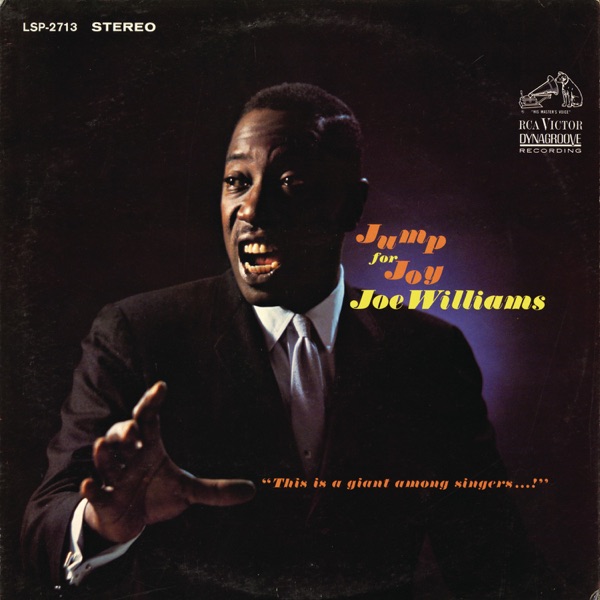
Joe Williams Proves He's More Than the Blues
Williams swinging through standards and obscurities, backed by a full orchestra—a deliberate move to expand his reach.
By 1963, Joe Williams had spent years establishing himself as a first-rate blues and ballad singer, work that paid well and built a real audience. Jump for Joy marks a deliberate pivot: Williams stepping into the ring with a full orchestra, arranged and conducted by Jimmy Jones and Oliver Nelson, tackling a mix of familiar standards and deeper cuts. The choice of venue—Webster Hall, a Manhattan nightclub—keeps things intimate despite the orchestral scale, and that balance matters. This is Williams asking to be heard as a complete vocalist, not just the guy who sang the blues.
The album's real strength lies in its breadth. Williams doesn't abandon what made him known; he expands into it. The orchestrations from Jones and Nelson give each track breathing room without drowning him out. AllMusic noted that the record "tries to portray Williams as more than just a blues singer," and that's precisely the point—not rejecting his past, but proving his range. He moves between familiar territory and material most singers would overlook, and he sounds entirely comfortable in both.
Jump for Joy arrived at a moment when Williams had already built substantial credibility. This wasn't a desperate reinvention or a last-ditch grab for prestige. It was a confident artist telling his label and his audience: I can do this too. Whether that expansion landed permanently or stayed as a one-off statement, the album itself holds up as proof of concept—Williams doing exactly what he set out to do.