Two Voices Trading Across the Reeds
Mann and Collette swap instruments constantly, keeping the listener alert to what's coming next.
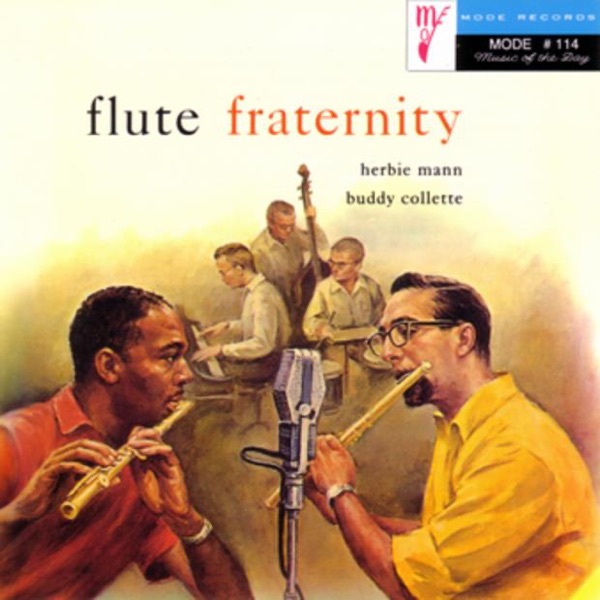
The heart of Flute Fraternity (1957) is the conversation between Herbie Mann and Buddy Collette, two reed players who refuse to stay in one lane. Mann handles flute, clarinet, and saxophone across these sessions; Collette does the same, and the album's real appeal lies in watching them trade roles. One moment Mann leads on flute while Collette shadows on clarinet, the next they flip. It's restless and playful, never settling into comfort.
Jimmy Rowles on piano and the rhythm team of Buddy Clark on bass and Mel Lewis on drums keep things grounded and swinging lightly beneath all that horn activity. Rowles in particular deserves attention—he's not just comp-ing changes but responding to every shift, anticipating the mood before it fully arrives. The recording quality lets you hear the interplay clearly, which matters when the whole point is listening for who's doing what.
AllMusic reviewer Scott Yanow noted that the constant switching of lead voices among their various horns is what makes this music interesting, and he's right. The Penguin Guide found the sheer number of instrument combinations scattered and scattered-feeling, which is a fair complaint if you want a record to commit to one idea. But that restlessness is also what keeps these six tunes from sounding dated or tired. It's a solid session that values curiosity over consistency.
Who's playing
Where next?
More by Herbie Mann
All 36 albums →


The musicians on this record
Their own records, close in time