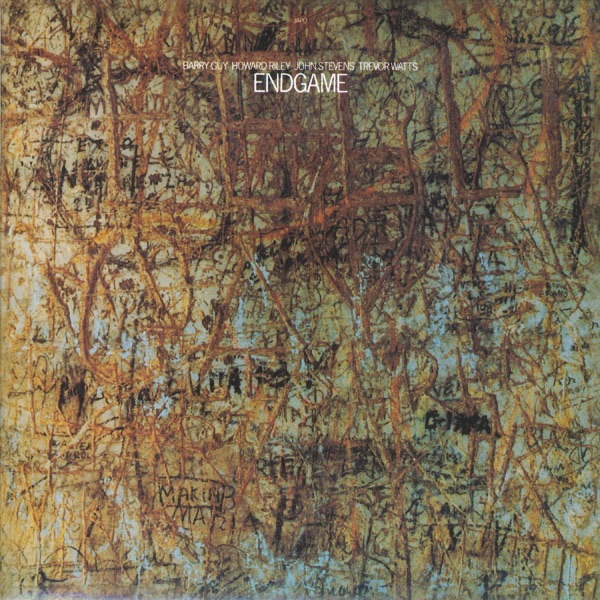
Three Voices Locked in Urgent Conversation
Guy, Riley, and Watts push past melody into pure sonic argument, each player refusing to give ground.
By 1979, Barry Guy had already established himself as a restless composer and improviser, but Endgame marks a turning point toward uncompromising abstraction. This trio session with Howard Riley on piano and Trevor Watts on saxophone strips away ornamentation and settles into sustained tension. There is no groove here, no head-solos-head structure. Instead, the three musicians negotiate space in real time, their instruments cutting across each other like voices in an argument nobody wants to resolve.
Guy's bass work is particularly striking—less a harmonic anchor than a constant pressure, prodding and questioning Riley's chords. Riley responds not with lush accompaniment but with staccato phrases and silences that feel deliberate, aggressive even. Watts moves between sax and other instruments, his tone sharp and investigations specific. The record sounds like three people with something urgent to say and no patience for conventional politeness. It's tense in the best sense: engaged, focused, genuinely difficult.
This is not Guy at his most accessible. Endgame sits deeper in the experimental end of his catalog than most of his other work, making it essential listening for anyone serious about British free jazz in that era, but hardly an entry point. Start with something more welcoming first, then come back here when you're ready for music that makes real demands.
Who's playing





