1958 · Album
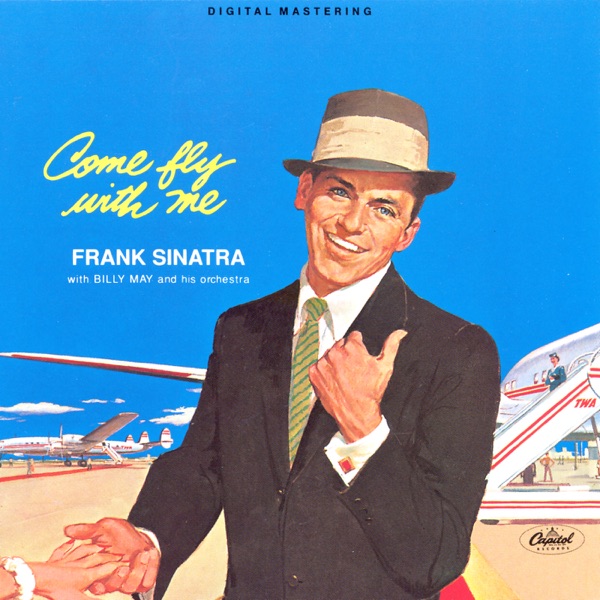
Come Fly With Me
Recorded 1957-1958 · Capitol Records · Produced by Voyle Gilmore
Nelson Riddle's Global Vision
Riddle's orchestrations turned Sinatra's voice into a traveler, not just a singer.
Come Fly with Me works because Nelson Riddle understood what Sinatra needed in 1958: not another intimate saloon album, but a showcase for movement and escape. Riddle's arrangements are the spine of this record. Where previous Sinatra sessions had leaned into torch ballads and close-mic'd vulnerability, Riddle built soundscapes that moved—geographical, emotional, architectural. Listen to the title track: the orchestra doesn't accompany Sinatra so much as transport him. The brass swells, the strings suggest distance, and Sinatra's voice becomes something almost weightless, carried along by the momentum Riddle created.
Riddle had worked with Sinatra before, but this album gave him room to be expansive in a way that matched Sinatra's own appetite for something bigger. The concept—a world tour in song—could have felt gimmicky. Instead, Riddle's orchestrations made each destination feel real: "Moonlight in Vermont" gets delicate strings; "Around the World" moves with actual propulsion. The arrangements never overshadow Sinatra's voice; they're too skillful for that. But they're always present, always shaping the air around him.
Come Fly with Me sold well and established a template Sinatra returned to throughout the late 1950s. But this first one has a particular freshness because neither artist was repeating a formula yet. Riddle was still discovering what he could do with the concept album form, and Sinatra was still hungry to explore it. The result feels less like a standard Sinatra album and more like a genuine collaboration, where the arranger's vision and the singer's instrument found something together.
Who's playing
Joe Mondragondouble bass
Bill Millerpiano
Al Hendricksonguitar
Conrad Gozzotrumpet
Manny Kleintrumpet
Vito N. Manganotrumpet
Shorty Sherocktrumpet
Pete Candolitrumpet
Joe Howardtrombone
Ed Kusbytrombone
Murray McEacherntrombone
Si Zentnertrombone
Pullman “Tommy” Pedersontrombone
Alvin Stollerdrums
Frank Flynnpercussion
Buddy Collettewoodwind
Harold Dicterowviolin
Alvin Dinkinviola
Fred Fallensbywoodwind
David Frisinaviolin
Jacques Gasselinviolin
Ben Gillviolin
Elizabeth Greenschpooncello
Jules Jacobwoodwind
Armand Kaproffcello
Harry Kleewoodwind
Dan Lubeviolin
Edgar Lustgartencello
Verlye Millsharp
Alex Murrayviolin
Alexander Neimanviola
Paul Neroviolin
Lou Radermanviolin
Paul Robynviola
Mischa Russellviolin
Wilbur Schwartzwoodwind
Paul Shureviolin
Eleanor Slatkincello
Felix Slatkinviolin
Marshall Sossonviolin
Dave Sterkinviola
Joe Washburnetuba
Skeets Herfurtwoodwind
Ted Nashwoodwind
Vincent DeRosaFrench horn
Jules Kinslerwoodwind
Ray Kramercello
Gerald Vinciviolin