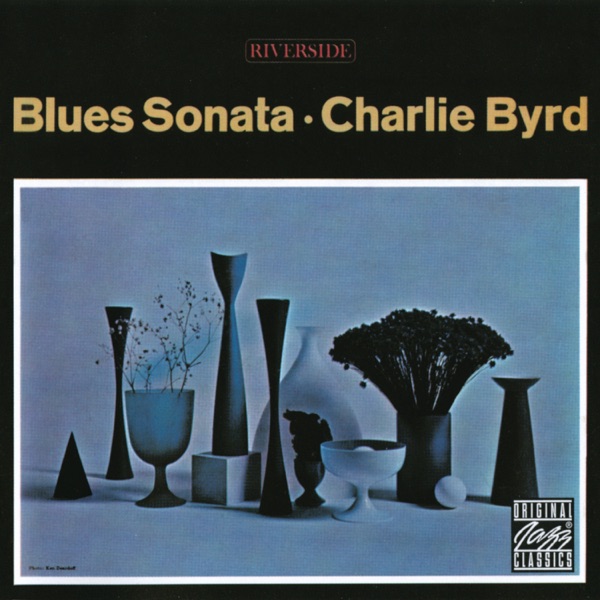
Fingerstyle Blues in a Quiet Room
Byrd plays blues on classical guitar like someone telling you a secret at midnight.
Blues for Night People sits you down in a dim room where Charlie Byrd is playing classical guitar with the touch of someone who learned fingerstyle before he learned jazz. The guitar is warm and precise, each note distinct, the blues arriving not through wail or distortion but through phrasing and bent notes that feel like they're being thought through rather than performed. Keter Betts on bass walks quietly underneath, keeping time without rushing, and Gus Johnson on drums stays restrained, brushes more than sticks, keeping the whole thing intimate. There's no trumpet, no saxophone, no horn section — this is just three players in a conversation.
The mood is late-night and contemplative, which is exactly what the title promises. Byrd's approach to the blues here is unusual for 1957 jazz. He's not trying to swing hard or prove anything. Instead there's a gentleness to these recordings, a willingness to let space breathe. The classical guitar technique gives everything a clean, almost delicate quality, but the blues content is real — minor-key melodies, call-and-response phrasing, the harmonic shapes that define the form. It's blues played with restraint rather than urgency.
This is early work for Byrd, before bossa nova made him famous, before he became known internationally. It matters because it shows a musician already fully formed in his approach — the fingerstyle classical technique, the blues vocabulary, the taste for simplicity. Whether you find this album essential depends on what you want. For someone interested in Byrd's development or in how the blues moved through jazz guitar in the fifties, it's direct and honest. For someone hearing Byrd for the first time, Jazz Samba (1962) is the better entry point. This one rewards listeners who already have some affection for his sound and want to hear him before the bossa nova period defined his career.
Who's playing



