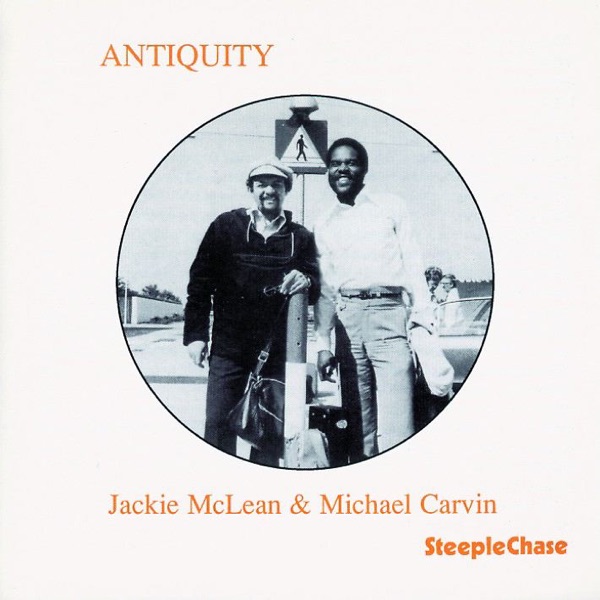
Midnight Conversations in a Smoke-Filled Room
McLean's alto cuts through like a knife looking for something, finding it only by accident.
The room is dense. Alto saxophone hanging in the air, not bright but warm—slightly breathy, slightly urgent. Jackie McLean circles around the melody like he's not sure he trusts it, bending notes downward, pulling back from the edges. The rhythm section moves underneath him steady but loose, no rushing, giving him space to think out loud. When the piano enters, it's thoughtful, minimal. There's room for silence here. This is not a happy album, and it's not a sad one either. It's the sound of someone working through something at three in the morning.
Antiquity (1959) sits in McLean's catalog as a record made by a player in his prime but still searching—not a debut, not a milestone, just solid work at a moment when he'd found his voice but hadn't yet calcified into it. The tunes are mostly standards and originals that don't announce themselves. No heroic breakouts, no revolutionary lineups. What matters is the conversation between horn and rhythm, the texture of how these musicians occupy the same space. The recording quality is close and intimate, catching breath and fingers on strings, the physical reality of the session rather than a polished commercial shine.
If you want McLean at his most accessible, go to A Fickle Sonance (1961) or Jacknife (1962), where the energy is sharper and the ensembles fuller. This is for when you want to hear a player thinking in real time, unselfconsciously, without the need to prove anything.


