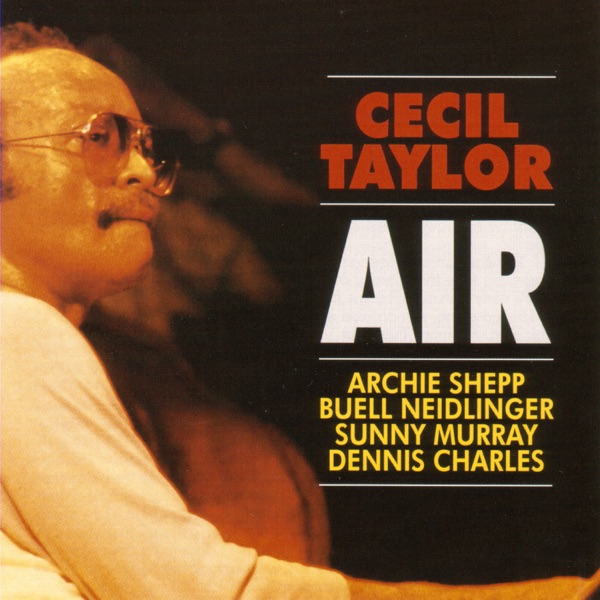
Taylor at the Threshold of Abstraction
Taylor stretches the jazz canvas, forming the radical vocabulary he would master on later landmark recordings.
Air captures Cecil Taylor at a pivotal moment—the point where his post-bop fluency begins to dissolve into something far stranger and more personal. Recorded in October 1960 for Candid, this album documents Taylor in transition, still grounded in blues and lyricism but already reaching toward the fractured, polytonal language that would define his mature work. The rhythm section of Buell Neidlinger, Denis Charles, and Sunny Murray stays tight and responsive, giving the music a skeletal clarity rather than the dense, architecturally complex sound Taylor would develop later.
Archie Shepp appears on two tracks and adds a raw, vocal quality to the proceedings—his saxophone cuts through Taylor's dense piano figures with surprising directness. What makes Air distinctive is its refusal to settle. Taylor's playing here is restless, full of sudden shifts in register and touch, cascading runs interrupted by stark silences. He's not yet the fully formed avant-garde figure of Unit Structures, but he's already abandoning the neat symmetries of conventional bebop.
For newcomers to Taylor, Air is far more approachable than his later work, yet it genuinely matters—it shows the moment when one of jazz's most uncompromising artists began to forge his own language. AllMusic reviewer gave it 4.5 out of 5 stars, and rightly so. This is Taylor doing essential work, neither his most experimental nor his most accessible, but deeply engaged in the act of becoming.
Who's playing
Where next?
More by Cecil Taylor
All 77 albums →
The musicians on this record
Their own records, close in time


