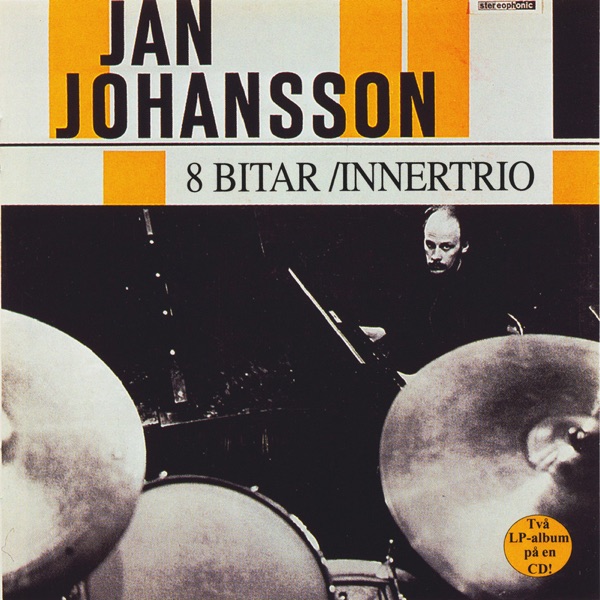
1961 · Album
8 bitar
Recorded 1959 · Hørnet · Produced by Unverified — detail omitted
Folk Tunes, Jazz Hands, Eight Tracks
Johansson takes Swedish folk melodies and makes them swing without breaking what makes them Swedish.
8 bitar is one of those albums that works best when you stop waiting for it to become something else. Jan Johansson recorded it as a piano album built around traditional Swedish folk material, and if you come in expecting hard bop or post-bop complexity, you will miss the point. The album is quiet, spare, and deliberate. Johansson lets the melodies breathe. He does not dress them up in jazz clothing so much as he finds the places where jazz phrasing and folk melody are actually compatible — and then he stays there.
What makes this interesting compared to other Johansson records is how restrained the jazz vocabulary is. He was a capable arranger and worked comfortably in large-ensemble settings, but here it is largely him at the piano (verifiera om basist medverkar), and the folk tunes do most of the structural work. Tracks like the traditional material he draws from have a plainspoken quality that he preserves rather than overhauls. The left hand keeps things grounded, the right hand occasionally swings, but nobody is showing off. It is a modest record in the best sense — it knows what it wants to do and does it without fuss.
If you are new to Johansson, this is probably not the first place to start. His later work exploring the same territory went further and made a bigger impression on Scandinavian jazz broadly. But 8 bitar is worth knowing because it shows the instinct already fully formed — this idea that folk music and jazz do not need to compromise each other, that you can honor both if you are careful. For anyone curious about where Swedish jazz developed its own sound apart from American models, this album is a useful and genuinely enjoyable piece of that story.
Who's playing
Where next?
More by Jan Johansson
All 21 albums →