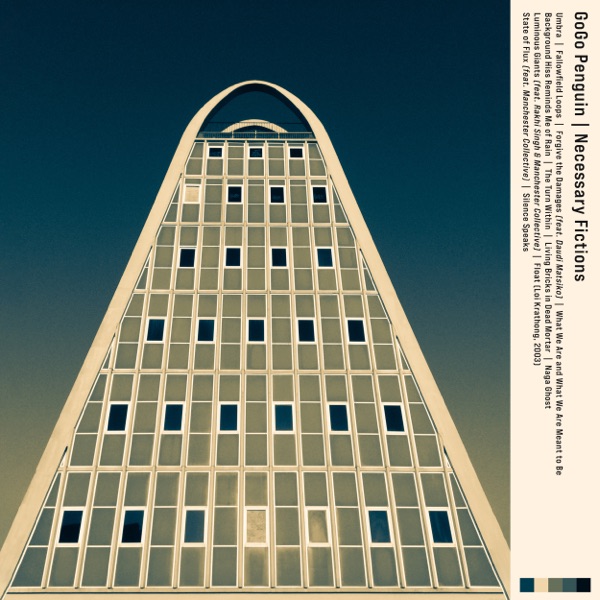
The Trio That Plugged In
GoGo Penguin came out of Manchester, not New York or London, and that matters. Chris Illingworth on piano, Nick Blacka on bass, and Rob Turner on drums built a sound out of the city's club culture as much as any jazz tradition — you can hear techno's insistence, the churn of drum-and-bass, the patient repetition of minimalist composers like Reich or Nils Frahm. But underneath all that machinery, they're still improvising, still listening to each other in real time. That tension between programmed-sounding precision and human looseness is basically the whole appeal.
Their breakthrough record, v2.0 (2014), got them nominated for a Mercury Prize and put them on Gondwana Records' map alongside artists chasing similar cross-pollination between jazz and electronic music. Turner's drumming is the engine of the whole thing — he plays with the kind of clipped, programmed feel you'd expect from a drum machine, but it's him hitting real skins, which gives the music its nervous energy. Illingworth's piano lines loop and build the way a synth arpeggio would, and Blacka's bass holds it all together with a weight that keeps the whole enterprise from floating off into pure texture.
Signing to Blue Note for Man Made Object (2016) was a notable move — a label built on Hard Bop and Post-Bop history taking on a band that sounds more like Aphex Twin at times than Art Blakey. It worked because the songs are genuinely well-constructed, not just mood pieces. Tracks build with a kind of architectural logic, sections locking into place, tension released in ways that feel composed even when you know it isn't fully written out. A Humdrum Star (2018) pushed further into darker, more atmospheric territory, and later records kept refining the formula rather than reinventing it.
If you come to GoGo Penguin expecting swing or blues language, you'll be confused. This isn't that lineage, at least not on the surface. What they share with the older tradition is the trio format itself and the commitment to real-time interplay — three musicians reacting to each other, no overdubs papering over the cracks. Comparisons to Esbjörn Svensson Trio are inevitable and fair; e.s.t. opened the door for piano trios to borrow from rock and electronic music without apologizing for it, and GoGo Penguin walked straight through.
What I'd tell a friend before pressing play: don't expect ballads, expect momentum. This is music built for headphones on a train or a late-night drive, not a smoky club. It's precise almost to a fault, and if you want raw looseness you might find it too controlled. But if you want to hear what happens when a jazz trio takes electronic music seriously as a structural idea rather than a texture to sprinkle on top, this is one of the clearest examples going.