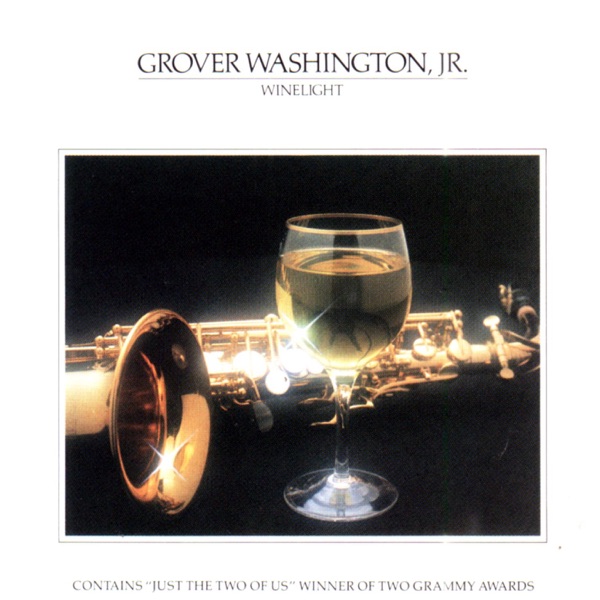
Smooth Jazz's Turning Point
Winelight didn't just arrive—it fundamentally shifted what jazz could sound like on the radio.
Winelight arrived in 1980 as a fully formed commercial statement, and it connected immediately. The album, propelled by "Just the Two of Us"—a collaboration with Bill Withers that became impossible to escape—is often credited for leading to the 1980s smooth jazz explosion. This wasn't a slow burn or a critical rediscovery; radio embraced it, audiences bought it, and the Grammy committee validated it in 1982 with the award for Best Jazz Fusion Performance. AllMusic reviewer Scott Yanow described it as "a memorable set of high-quality and danceable soul-jazz," and the Penguin Guide to Jazz Recordings awarded it three stars, recognizing its craft even if the critical establishment remained cautious about the commercial accessibility that made it matter.
What makes the record hold up is the session itself. Marcus Miller on bass, Steve Gadd on drums, Richard Tee on Rhodes piano, and Eric Gale on guitar create a rhythm section that swings without straining—these players knew how to lock into a groove that felt effortless. Grover Washington Jr.'s saxophone floats over the top with restraint; he's not trying to dominate the space. Ralph MacDonald on percussion and William Eaton on synthesizer fill the air between the rhythm and melody, while Ray Chew adds texture on clavinet. The production never feels cluttered. Each element occupies its own space, and the arrangements breathe.
This wasn't Washington's debut, but it became his defining moment—the record that made his name synonymous with smooth jazz itself. Whether that's a compliment or a constraint depends on your taste. What's undeniable is that Winelight gave people permission to hear jazz as something comfortable, danceable, and social rather than demanding or austere. For better or worse, it worked.
Who's playing
Marcus Millerbass
Richard TeeRhodes piano
Eric Galeguitar
Grover Washington, Jr.saxophone
William Eatonsynthesizer
Steve Gadddrums
Ralph MacDonaldpercussion
Ray Chewclavinet
Paul Griffinclavinet
Bill Withersperformer
Where next?
More by Grover Washington Jr.
All 22 albums →


The musicians on this record
Their own records, close in time


