1981 · Album
Three Quartets
Recorded 1981 · Elektra/Musician · Produced by Chick Corea
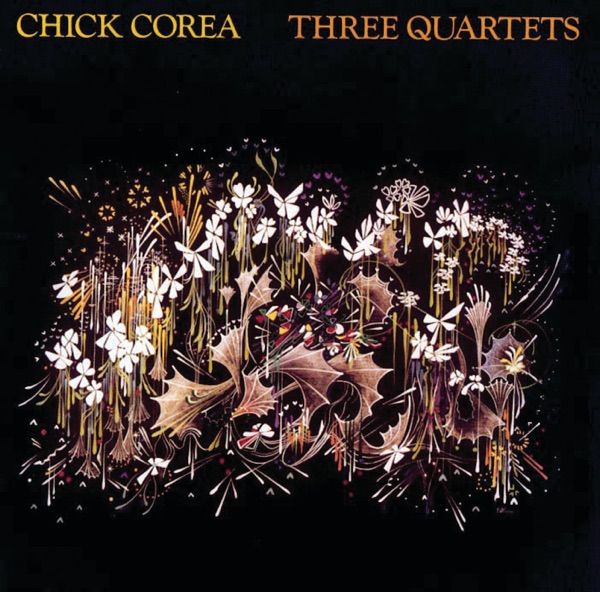
Four Musicians Meeting at the Peak
Four virtuosos trading ideas in real time, no arrangements, no safety net—just conversation.
Chick Corea was already a major figure by 1981, but Three Quartets (1981) stands apart from his fusion output and his classical turn. This is him in a working quartet format with no electric keyboards, no big production, just acoustic piano and three of the sharpest players available. Michael Brecker on tenor saxophone, Eddie Gómez on bass, and Steve Gadd on drums—each one at the top of their game, each one used to leading their own sessions. The collaboration feels like peers deciding to see what happens when they lock in together.
The music is straightforward hard bop conversation. Corea states a theme, Brecker responds with cutting lines, Gómez and Gadd lock into grooves that stay fluid rather than locked. There's no searching or hesitation here—these are players who know exactly what they're doing. The tunes move quickly, tempos shift, and the whole thing has the feel of a band that trusts each other completely. If you know Corea's ECM records or his fusion work, this will feel both familiar and different. There's no production mystique, no electronic shimmer. It's the sound of four people making decisions in the moment.
This album matters because it exists outside the commercial machinery. It's not a statement album. It's not trying to prove anything. It's simply what four of the best musicians of that moment did when they decided to play together on tape. For listeners who came to Corea through his more famous electric work, this shows another side—one that values restraint and interaction over spectacle.
Who's playing
Where next?
More by Chick Corea

Crystal Silence 1973

Romantic Warrior 1976

The Chick Corea Acoustic Band 1989
The Chick Corea Elektric Band 1986
The musicians on this record
Their own records, close in time



