Drums and Strings in Seasonal Motion
Hart leads a string-anchored ensemble through mood pieces that breathe and settle like actual weather changing.
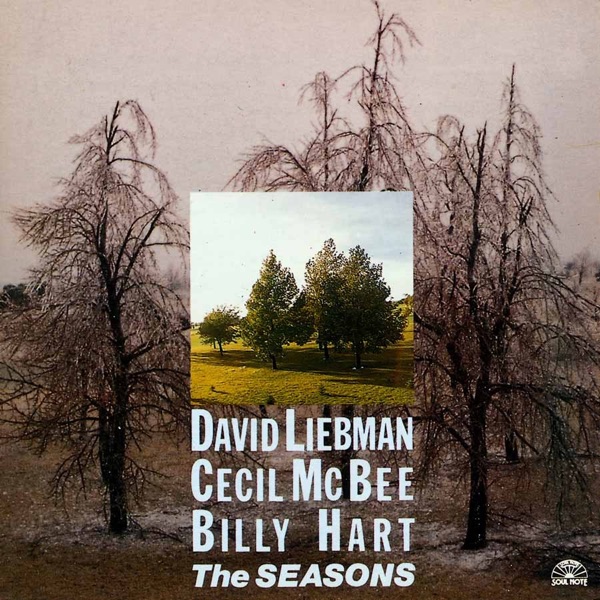
The Seasons opens with brushes on snare and mellow strings — violins and cello — establishing a chamber-jazz intimacy that catches you off-guard if you expect Hart primarily as a hard-swinging timekeeper. This is a quieter record, one where space matters as much as pulse. The drums are present but rarely urgent; Hart sits back, listening, responding to the melodic turns around him. The album moves through four long-form pieces, each one building its own atmosphere without rushing. There's acoustic piano, bass, and those strings threading through everything, creating something between composition and collective improvisation.
Recorded in 1994, The Seasons arrived during a period when Hart had already established himself through decades of work with Herbie Hancock, Shirley Horn, Stan Getz, and others. This wasn't a debut or a reinvention — it was a consolidation, a chance to step out front with material that reflected where his ear had landed after all those collaborations. The album feels deliberate and mature. Nothing here is flashy or designed to impress through virtuosity alone. Instead, Hart shapes the ensemble like a conductor, letting each section find its weight and texture.
This is not Hart's most accessible entry point if you're new to his work, nor is it the record that will tell you why he's been essential to so many landmark sessions. Start with Hancock's Maiden Voyage (1965) or Horn's Just Friends (1997) to hear him in his element. The Seasons works best as a standalone exploration—a chance to hear a master drummer thinking compositionally, building moods rather than chasing momentum. It's a solid, unhurried listen for listeners willing to meet it on its own pace.
Who's playing
Cecil McBeebass
Billy Hartpercussion