Dizzy's Detour Into the American Dream
Gillespie trades bebop angles for something warmer, more grounded, still unmistakably his own.
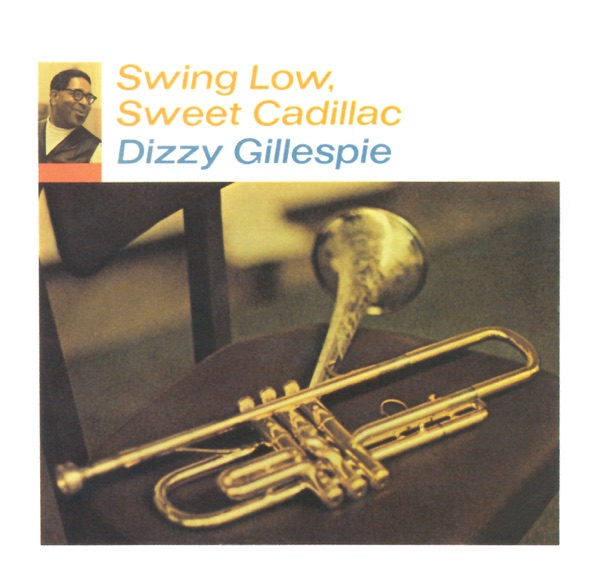
By the time Dizzy Gillespie made Swing Low, Sweet Cadillac, he'd already rewired modern jazz. The hard angles and velocity of bebop were his vocabulary, his calling card. This record finds him in a different mood—still swinging, still inventive, but willing to sit inside the song rather than constantly explode it. The title track captures this perfectly: it's got church feeling mixed with that confident stride of American prosperity. Gillespie's trumpet glides and soars, but there's patience here. You can hear he's thinking about melody as much as velocity.
The real draw is how the band locks into these arrangements without losing that forward-thinking edge. This isn't Gillespie going soft or commercial. It's Gillespie acknowledging that a good tune, played with conviction and swing, doesn't need to be dismantled to be interesting. Tracks move between ballad territory and straight-ahead swingers, and the rhythm section keeps everything grounded and cooking. The arrangements breathe. There's space between the phrases, which lets you hear what each player is actually doing.
This sits somewhere in the middle of Gillespie's catalogue—not an essential starting point, and not a forgotten oddity either. If you know his bebop work and want to hear him pivot toward something more lyrical without losing his voice, this album delivers. It's honest work from a master musician who wasn't afraid to try a different angle. Not every session needs to be revolutionary. Sometimes it just needs to swing.