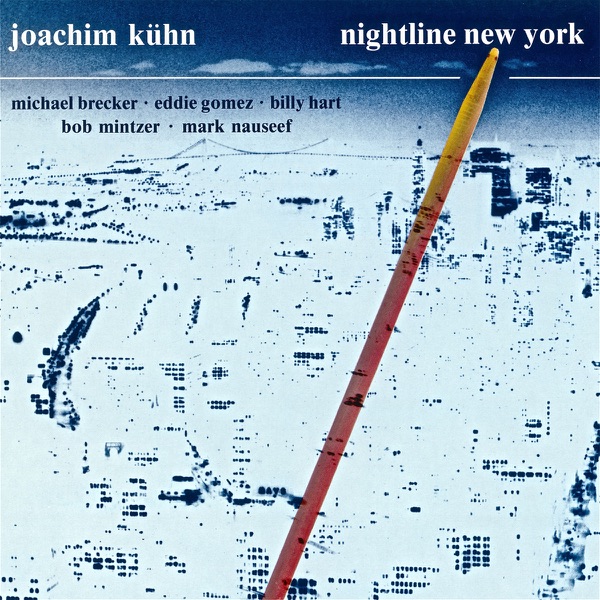
Kühn Alone: The Pianist in Pure Form
A solo piano record that strips away everything except the player's thought and fingers.
Solo Now arrived in 1976 without fanfare—a pianist's statement released on a modest label, the kind of record that found its audience slowly through musicians and serious listeners rather than radio or critical consensus. Joachim Kühn's solo piano sets were not yet fashionable in jazz circles oriented toward fusion or the saxophone mainstream. What makes the album matter now is simply this: it is a clear-eyed document of Kühn's approach to the instrument when there is nowhere to hide.
Without a rhythm section or any other voice, Kühn's touch and melodic intelligence become the entire subject. The record moves between angular modernist lines and moments of genuine lyricism, often within the same piece. He does not play fast for display; when he accelerates, it serves an idea. The left hand grounds itself in classical piano vocabulary while the right hand thinks like a jazz soloist working through harmonic territory. It is never tentative, never searching—the playing has the quality of someone who knows exactly what he wants to say and how to say it on the keyboard.
This is not a stepping stone in Kühn's career or a sidebar to his group work. Solo Now is how you hear what Kühn actually thinks about melody and structure when the conversation is between himself and the instrument. For anyone curious about European-trained pianists working in jazz during the 1970s, it remains an essential record.