1975 · Album
Six Million Dollar Man
Recorded 1975 · Flying Dutchman · Produced by Oliver Nelson (arranger and conductor)
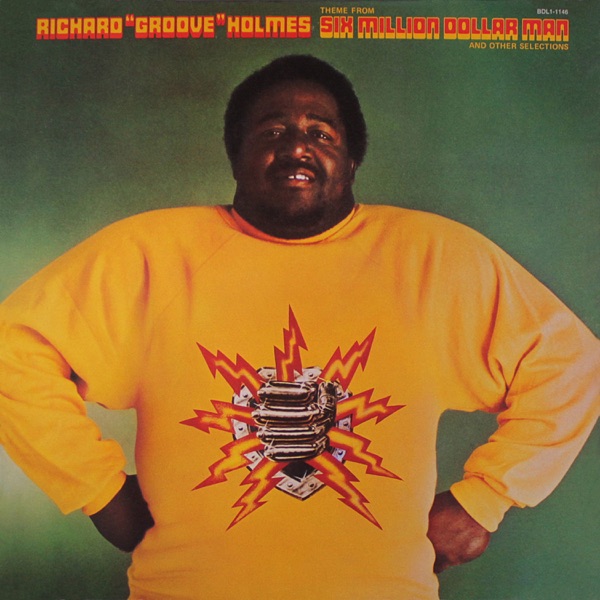
Groove Holmes Swings the Small Screen
Holmes trades his church-born intensity for straight-ahead funk and soul-jazz orchestration.
Six Million Dollar Man arrived in 1975 as a straightforward organ-funk record built on television theme material. It was not a critical sensation — Flying Dutchman releases at this point were more commercial than cutting-edge, and the album's tie to pop culture gave it an easy-listening veneer that jazz listeners typically avoided. But the real work here is Oliver Nelson's arrangement and conducting. This is not Hammond B3 soul-jazz in the traditional sense. Holmes plays lighter, more rhythmic lines over a large ensemble that includes horn sections, strings of saxophones and trombones, and a rhythm section that locks hard. Tom Scott on tenor and David T. Walker on guitar push the harmonic sophistication; the drums cycle between Jim Gordon and Shelly Manne, both masters of pocket playing. Tracks move between theme-song curiosities and extended soul-funk grooves where Holmes's organ becomes a textural voice rather than the lead voice.
The appeal is almost accidental — a session album that turns into something genuinely listenable because Nelson knew how to write for a big band without drowning the soloists. It is not a peak Holmes record, and it trades the gospelly urgency of his earlier work for a cooler, more arranged aesthetic. But if you want to hear what late-1970s Flying Dutchman jazz sounded like when the label still had serious arrangers and studio money, this is efficient proof. The album sank fast and never built a cult reputation. It remains peripheral, buried under Holmes's more canonical recordings.
Who's playing
Chuck Raineybass
Chuck Domanicobass
Mike Woffordelectric piano, piano
David T. Walkerguitar
Tom Scotttenor saxophone
Oscar Brasheartrumpet
Bobby Bryanttrumpet
Chuck Findleytrumpet
Garnett Browntrombone
Maurice Spearstrombone
Lloyd Ulyatetrombone
Jim Gordondrums
Shelly Mannedrums
Mayuto Correapercussion
Larry Bunkerpercussion
Gene Ciprianowoodwind
Jack Nimitzwoodwind
Jerome Richardsonwoodwind
Bud Shankwoodwind
Where next?
More by Richard Groove Holmes
All 34 albums →


The musicians on this record

The Drum Sessions 1975
Shelly Manne
plays drums (drum set) here
plays drums (drum set) here

born again 1962
Chuck Rainey
plays bass here
plays bass here


