1962 · Album
Sings Lover Man and Other Billie Holiday Classics
Recorded 1962 · Columbia Records · Produced by Teo Macero
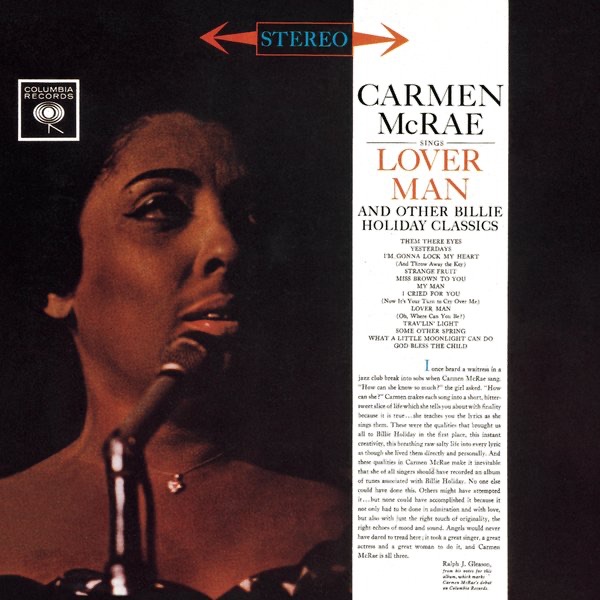
Honoring the woman who made her sing
McRae steps fully into her own voice while paying respect to the artist who shaped it.
By 1962, Carmen McRae had already built a substantial career — she was a skilled interpreter with a warm, intimate sound and genuine jazz credibility. But this album sits at a turning point: it marks the moment she stopped simply being a good singer and became willing to claim her deepest influence openly. A tribute to Billie Holiday, recorded just two years after Holiday's death, could have felt either reverential or claustrophobic. Instead, McRae uses the project as a way to say something specific about what Holiday meant to her as an artist and a person.
Norman Simmons arranged the album and played piano throughout, and his arrangements give these familiar songs room to breathe. McRae doesn't imitate Holiday — that would have been pointless and small. Instead, she inhabits the same emotional territory with her own phrasing, her own control of dynamics, her own interpretive choices. Produced by Teo Macero, the recording has clarity without coldness, intimacy without sentimentality. These are working interpretations, not museum pieces.
The album landed at exactly the right moment in her career. AllMusic critic Scott Yanow called it one of McRae's "best recordings of the 1960s," and The Penguin Guide to Jazz Recordings gave it a full four stars — recognition that mattered then and matters now. It's the record where McRae's own artistry and her acknowledged debt to Holiday become the same thing, not in conflict.
Who's playing
Bob Cranshawdouble bass
Norman Simmonspiano
Mundell Loweguitar
Eddie “Lockjaw” Davistenor saxophone
Walter Perkinsdrums
Nat Adderleycornet
Where next?
More by Carmen McRae

Live at Bubba's 1988

By Special Request 1956
♫
Take Five at Basin Street East 1961

Carmen Sings Monk 1990
The musicians on this record
Their own records, close in time



