1984 · Album
Pieces of Time
Recorded September 1983 · Soul Note · Produced by Not specified in available documentation
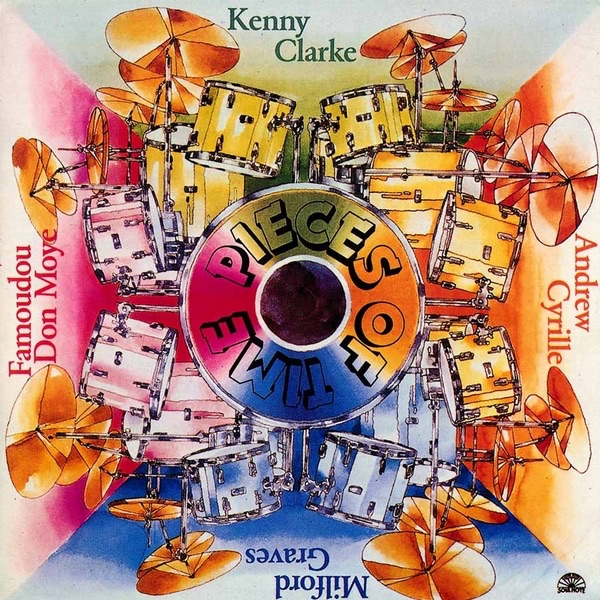
Four Drummers, One Conversation
The ensemble pieces are particularly rewarding, diverse yet remarkably cohesive, revealing new facets with each hearing.
Pieces of Time arrived quietly in 1984 on the Soul Note label, the kind of album that found its audience through word of mouth rather than commercial push. Critics noticed immediately though. AllMusic reviewer Ron Wynn called it a standout session, and the Washington Post's Mike Joyce wrote with genuine enthusiasm about what these four percussionists were doing together—not just playing drums, but building conversations where each voice brought something distinct. Clarke came with structure, Cyrille with precision, Milford Graves with emphatic free-form energy, and Famoudou Don Moye with what Joyce described as tropical lushness. The album works because nobody's trying to prove dominance. The drum dialogues don't sound like competition; they sound like four experienced players who know how to listen.
This wasn't Graves's main project—he had his own recording career and his theoretical work running parallel—but this session mattered because it showed what happened when master drummers stopped thinking of themselves as timekeepers and started thinking like composers. The four personal statements alone tell you something about the album's approach: nobody needed much space to say who they were. The ensemble pieces are where the real reward lives, the kind of things that do reveal new details the second and third time through.
It's a cult record, honestly. Not because it's obscure or difficult, but because it requires listeners who care about percussion as a complete musical language rather than as accompaniment. If you're curious about what four masters could make together in a single September session, this is worth tracking down.
Who's playing
Where next?
More by Milford Graves
All 19 albums →
The musicians on this record
Their own records, close in time