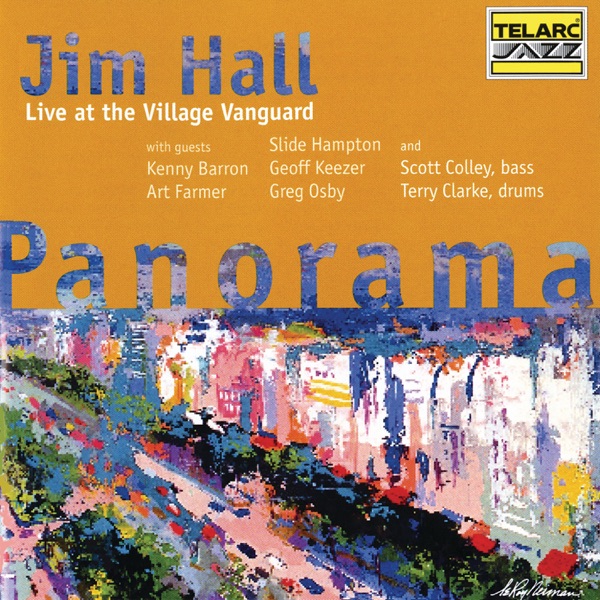
1997 · Album
Panorama: Live at the Village Vanguard
Recorded Live at the Village Vanguard, 1997 · Telarc · Album Position: His twenty-seventh album as bandleader
A Revolving Door of Voices
Hall's idea was clever—assembling musicians who'd rarely played together, each bringing a different vision of what jazz could be.
Panorama stands apart from Hall's recent Telarc work because it refuses to settle into a single sound. Instead of building an album around one unified concept or ensemble, Hall invited a succession of guest soloists to the Village Vanguard, each one stepping up to define the session in their own terms. AllMusic reviewer Richard S. Ginell caught this exactly: the album functions like a revolving door, with each musician offering a different slant on what jazz ought to be. It's a live recording, but deliberately constructed, almost like a concept album that just happens to be performed in front of an audience.
What makes this approach work is that Hall doesn't disappear behind his guests. His playing remains the spine holding everything together, but he's clearly energized by the friction of unfamiliar partnerships. Jim Ferguson, writing for JazzTimes, noted that Hall had rarely played with several of these musicians before, which gives the whole thing a sense of discovery—no well-worn grooves, no comfortable shortcuts. Ferguson called it "a concept project within the context of a live recording," and that tension between planning and spontaneity is exactly what keeps the album engaging across its length.
This isn't Hall at his most adventurous—those earlier Telarc records pushed harder in different directions. But Panorama catches him doing something equally valuable: proving that a great musician can step into nearly any company and find something worth playing. The Penguin Guide to Jazz Recordings rated it highly, and for good reason. It's a working session, in the best sense—musicians solving problems in real time, with Hall as the constant thread.