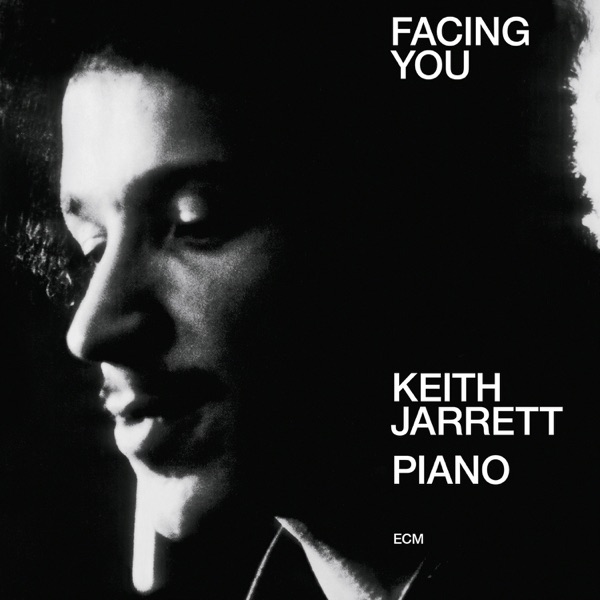
Solitude at the Keyboard, Unaccompanied
Jarrett alone at the piano, improvising his way through an entire album with nothing but his own hands and ears.
Put on Facing You and the first thing you hear is a single piano, unhurried, feeling its way forward. There is no bass walking underneath, no drums pushing the tempo, no horn line to lean on. Keith Jarrett sits alone and improvises across a run of pieces that move between lyrical, spare passages and sudden bursts of rhythmic drive. The mood is intimate and a little restless, the touch often gentle but never precious, and the pauses carry as much weight as the notes.
The album was recorded on November 10, 1971, and released on ECM in March 1972, Jarrett's first release on that label. It was a bold move at the time: solo piano improvisation was not a common format in jazz, and Jarrett committed to it fully. The album became a reference point for the form and is often cited as a hallmark of solo piano recording, a reputation that has held up since its release. The Penguin Guide to Jazz gave it 3.5 out of 4 stars.
If you are new to Jarrett, this is a good place to hear him without the distractions of a band, though it rewards patience more than it dazzles. His later solo concerts are more famous, but this record shows the foundation of that approach. It is not his most immediate album, but for anyone interested in what one pianist can do alone, it is an essential listen.
Who's playing
Keith Jarrettpiano
Where next?
More by Keith Jarrett
All 29 albums →