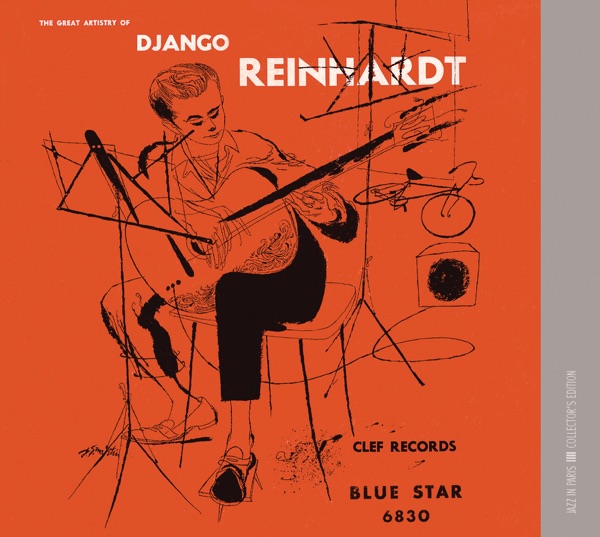
1959 · Album
Django
Recorded 1936–1948 · Decca · Produced by Information not verified

The Man Who Invented His Own Language
Reinhardt played guitar like nobody before him and, honestly, nobody since.
Here is the strange thing about Django Reinhardt: he learned to play guitar with two functioning fingers on his left hand after a caravan fire badly injured him in his early twenties. And yet he became the most influential European jazz guitarist in history, developing a style so personal that it still gets its own name — gypsy jazz, or jazz manouche — decades after his death. This compilation draws from recordings he made in the 1930s and 1940s, mostly with the Quintette du Hot Club de France alongside violinist Stéphane Grappelli, and if you have never heard Reinhardt play, this is a reasonable place to start.
What actually comes through on these recordings is speed, warmth, and a melodic instinct that is almost disarming. Reinhardt could swing hard and he could be tender, sometimes inside the same phrase. Tracks like "Minor Swing" show the Quintette at its most energetic — the interplay between guitar and violin is tight without being fussy. "Nuages" is the ballad showcase, slower and more spacious, and it holds up completely. The rhythm guitar work underneath, often provided by his brother Joseph, creates a distinctive churning feel that became the template for an entire genre.
One useful piece of context: in 1954, pianist John Lewis wrote a jazz standard called "Django" as a tribute to Reinhardt, who had died the year before. Lewis was a member of the Modern Jazz Quartet, and the piece became one of their signature compositions. That a major American jazz musician felt moved to memorialize Reinhardt that way tells you something about the reach of his reputation. This album is not a flawless document — the recording quality varies, as you would expect from material this old — but the playing makes it worth the effort.
Who's playing