1963 · Album
Conversations With Myself
Recorded February 1963 · Verve Records · Produced by Creed Taylor
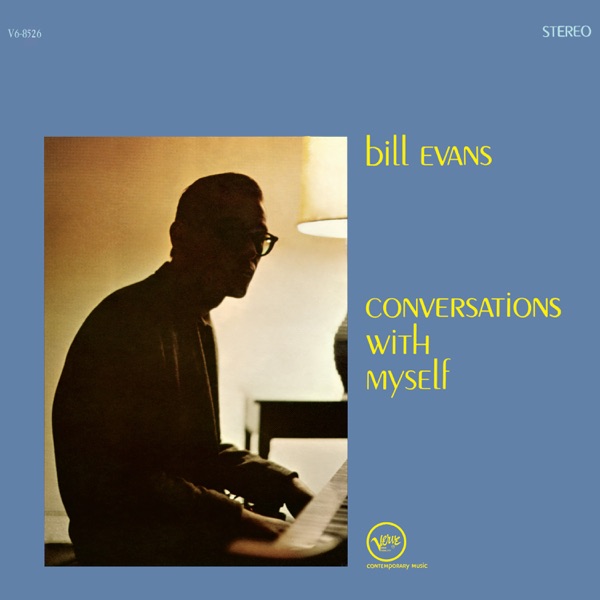
Three Hands, One Voice: Evans Alone
Bill Evans playing piano with himself, and somehow it sounds like a full conversation.
Here's what Bill Evans did: he recorded himself playing piano three separate times, then layered the tapes together so he could have a conversation with himself. No overdubs in the modern sense—just Evans responding to Evans, his left hand talking to his right hand, his comping answering his melody. It shouldn't work as well as it does. Most multitrack solo piano records feel like exercises or vanity projects. This one feels intimate, like you're overhearing someone think out loud.
The album works because Evans knew exactly what he was doing structurally. He wasn't just stacking random takes; he was composing arrangements in real time, deciding what each layer would contribute. Tracks like "Alone" and "Never Let Me Go" have genuine harmonic depth—there's tension between the voices, resolution, call and response. His touch remains impossibly gentle throughout, which matters because the overdubbing could easily turn muddy or precious. Instead it feels delicate, precise. The concept could've been gimmicky. In Evans' hands it becomes something like meditation, a way of exploring the piano's possibilities without another musician pushing back or compromising his vision.
This isn't his most essential album. If you're new to Evans, start with Portrait in Jazz (1959) or Peace Piece and Heart and Soul (1962) instead—those capture his lyrical gift more directly. But Conversations with Myself matters because it shows what happens when a thoughtful musician gets complete control over his sound. It's introspective without being self-indulgent, experimental without feeling cold. Just Evans, his piano, and his own best ideas for company.
Who's playing
Bill Evanspiano