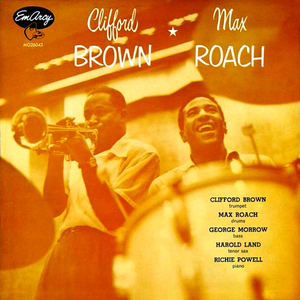
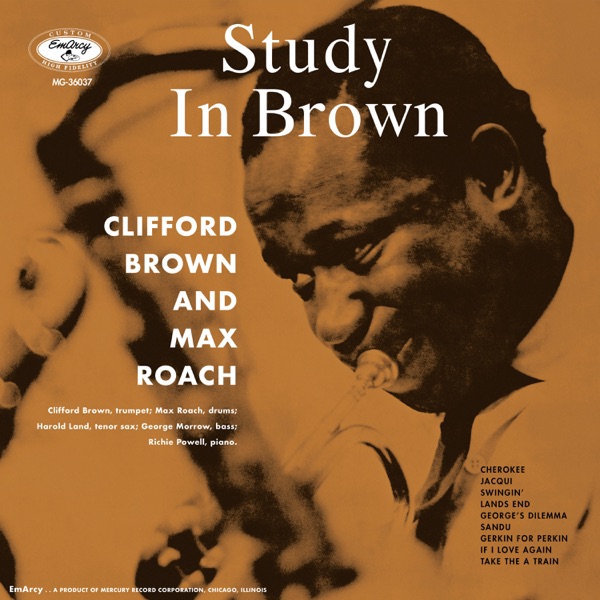
1958 · Album
Brownie Speaks
Recorded 1958 · EmArcy Records · Produced by Carl E. Jefferson

When Brownie's Trumpet Finds Its Voice
Brown plays with a clarity and directness that cuts through everything else on the bandstand.
Brownie Speaks arrives as Clifford Brown working at full confidence, past the point where he needs to prove anything to anyone. The trumpet work here is clean and purposeful—Brown has a tone that sits right in the middle of the horn, warm but never soft, and he uses it to say exactly what he means without unnecessary flourish. These are straightforward performances where every note counts. The rhythm section locks in tight, and there's an ease to the whole thing that comes from musicians who know their jobs and trust each other completely.
What makes this different from some of Brown's other work is the stripped-down approach. There's no reaching for the dramatic or the spectacular. Instead, you get direct statements followed by intelligent responses from the band. The tempos are mostly medium—fast enough to showcase the interplay but slow enough that everything has room to breathe. Brown's solos build logically, never rushing, never overstaying. When he steps back, the other voices get their moment, and the overall shape of each tune feels considered rather than improvised on the spot. This is professional jazz from people who'd worked out what they wanted to say.
If you're coming to Brown's music for the first time, this is a smart entry point. It shows his gift for melodic invention and his ability to play with real swing without any of the flashiness that sometimes makes older jazz feel dated. It's not his most celebrated recording overall, but it's the one that best captures what made him such a respected player among his peers—a musician who brought clarity and purpose to every gig.