1988 · Album
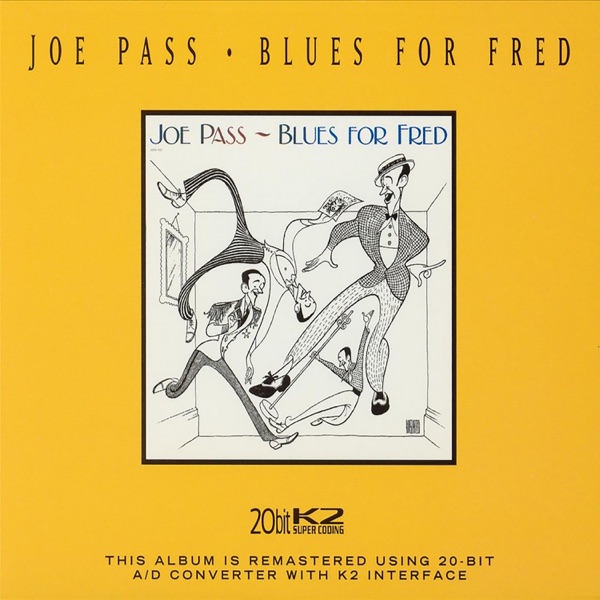
Blues for Fred
Released: 1988 · Type: Tribute album to Fred Astaire · Critical reception: The Penguin Guide to Jazz Recordings: 3/4 stars
A Guitarist's Farewell to an American Icon
Pass interprets the music with taste, solid swing, and constant creativity within the bop tradition.
Blues for Fred arrived in 1988 as Joe Pass's quiet acknowledgment of Fred Astaire's death the year before. This wasn't a grand orchestral statement or a celebrity tribute album in the modern sense. Instead, Pass did what he did best: he sat down with a guitar and worked through the American Songbook standards that had defined Astaire's career—"Cheek to Cheek," "Night and Day," "Lady Be Good," "The Way You Look Tonight." The album works because Pass never tried to compete with Astaire's artistry. He wasn't reimagining the songs as if the dancer-singer had never touched them. Rather, Pass played them as a musician who understood rhythm, timing, and how a melody could breathe. AllMusic reviewer Scott Yanow noted that Pass brought taste and solid swing to these interpretations, with versions that made listeners appreciate what made this guitarist distinctive in the first place. By 1988, Pass was well into his later years, and there's no wasted motion here—just a working musician paying respect through his instrument. The album sits comfortably alongside Pass's other solo and small-group work from this period, neither a peak nor a departure, but the kind of focused, professional statement that comes from someone who had already said most of what he needed to say. What matters is that it exists at all: a record made not for commercial calculation, but because one artist recognized something worth honoring in another.
Who's playing
Joe Passguitar