
Ritual and Noise in Sacred Space
The Art Ensemble treats the studio like a spiritual gathering, mixing reverence with controlled chaos.
Bap-Tizum arrives as the Art Ensemble of Chicago operating at a pivotal moment — they're still finding their voice, still figuring out how to translate their live energy onto tape. This record captures them in that sweet spot where they haven't yet fully crystallized their sound, which means it breathes with possibility. The title itself signals something religious, something about renewal and immersion, and the music follows through on that promise. You get the sense of a group playing inside their own ritual space, where free improvisation and written passages blur together without apology.
What makes this distinct from their later, more composed work is the willingness to just let things develop without a net. Tracks veer between moments of genuine quietness and sudden eruptions of organized noise. There's a scrappiness here that feels intentional rather than accidental — they're not smoothing things out for the listener. Some passages will sound immediately engaging while others might seem deliberately obtuse, and that's the point. The ensemble approach means you're never quite sure what instrument might surface next or what texture will emerge from the collective.
This is probably not the best entry point if you want the polished Art Ensemble that emerges later. Try People in Sorrow (1969) if you want to hear them with stronger compositional clarity and deeper emotional focus. But if you're curious about how this group learned to balance structure and chaos, how they developed their philosophy of organized improvisation, Bap-Tizum deserves attention. It's the sound of serious musicians figuring things out in real time, and that honesty matters.
Who's playing
Where next?
More by Art Ensemble of Chicago
All 49 albums →
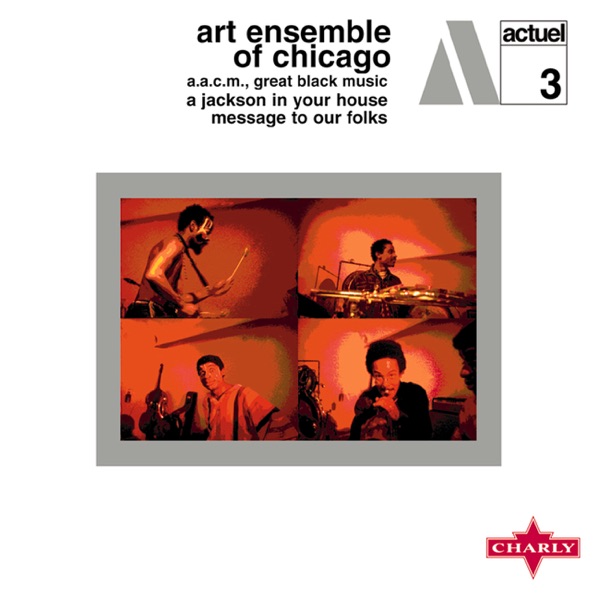

The musicians on this record
♫
Fast Last! 1974
Lester Bowie
plays brass here
plays brass here
♫
Egwu-Anwu (Sun Song) 1978
Joseph Jarman
plays woodwind here
plays woodwind here


