1983 · Album
Attitude
Recorded 1983 · Elektra · Produced by Lenny White, Michael Beinhorn
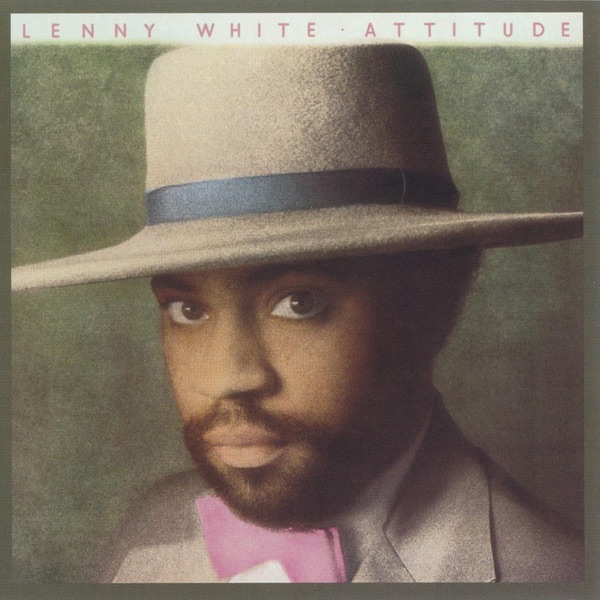
Fusion's Electric Pulse at Full Throttle
Attitude captures White at a peak moment, blending fusion's technical ambition with pop sensibility and groove.
By 1983, Lenny White had already defined himself as one of fusion's architects through Return to Forever, but Attitude marks something different — a statement of independent identity away from Chick Corea's shadow. Here, White steps fully into the role of bandleader and conceptual force, assembling a powerhouse ensemble that reflects the sound of early-1980s fusion at its most polished and commercially ambitious.
The album moves through funk-inflected grooves and intricate synth arrangements that feel contemporary without losing the genre's technical rigor. Marcus Miller anchors everything with authoritative bass work, while David Frank, Bernard Wright, and Bobby Jones layer synthesizers into dense, almost orchestral textures. Ray Gomez and Nick Moroch trade guitar lines with precision, and John Zorn appears as a sharp textural element. White's drumming remains the album's spine — propulsive, crisp, and always serving the song rather than overshadowing it.
Attitude is not an experimental detour or a fusion purist statement. It's a confident piece of 1980s pop-fusion that wanted to reach both the jazz audience and the radio listener. The production is clean and contemporary, the compositions are accessible without being simplistic, and the ensemble plays with real chemistry. This is White proving he could lead on his own terms, crafting an album that holds up as a solid example of what fusion could be when it balanced accessibility with musicianship.
Who's playing
Marcus Millerbass
Leon Pendarvispiano
Ray Gomezguitar
Nick Morochguitar
John Patiguitar
David Franksynthesizer
Bernard Wrightsynthesizer
Bobby Jonessynthesizer
Michael Beinhornsynthesizer
Jimmy Maelenpercussion
Lenny Whitemembranophone
Larry Chekofskyhandclaps
Alan Palankeradditional, keyboard
John Zornperformer
Where next?
More by Lenny White
All 21 albums →


The musicians on this record
Their own records, close in time


