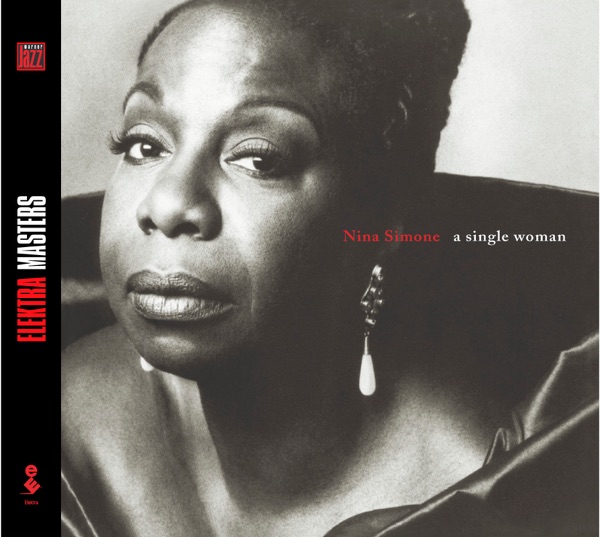
1993 · Album
A Single Woman
Elektra Records · Released: 1993 · Type: Final studio album
Simone's Final Word, Spoken Plainly
A late-career record that finds her voice still capable of cutting straight to the bone.
A Single Woman arrived in 1993 as Nina Simone's last studio album, and it's the kind of record that doesn't announce itself loudly. There's no grand statement, no attempt to reclaim past glory or prove anything to anyone. What you get instead is a singer who has spent decades saying exactly what she means, now doing it one more time. The album sits somewhere between jazz and soul, with Simone's voice doing most of the heavy lifting—dry, precise, occasionally sharp as a blade. She wasn't trying to sound young or trendy. She sounded like herself, which at that point in her life meant something earned and uncompromising.
The material ranges across standards and newer songs, and what matters most is how Simone handles them. Her phrasing hasn't softened with age; if anything, she seems less interested in flattering her voice and more interested in getting the lyric across. There's no wasted effort here, no flourish for its own sake. The production is clean but not overly polished—you hear the piano, you hear her, and that's usually enough. Some tracks sit in a slower, more contemplative space, while others have a bit more snap to them, but the mood throughout is one of someone who knows exactly what she's doing and isn't concerned with your approval.
For most listeners, this won't be where to start with Simone. Her earlier work—particularly her Blue Note and Philips recordings—captures her at a different peak, when she had more to prove and seemed hungrier. A Single Woman is for people who already know her catalogue and want to hear where the road ended. It's not a comeback record, not a final masterpiece, just a solid final statement from someone who had already said plenty.
Who's playing
Nina Simonepiano