1971 · Album
Where Fortune Smiles
Recorded 1970 · Dawn Records · Produced by Not publicly documented
Five Musicians Listening to Each Other
A lean, curious free jazz session where nobody tries to dominate the conversation.
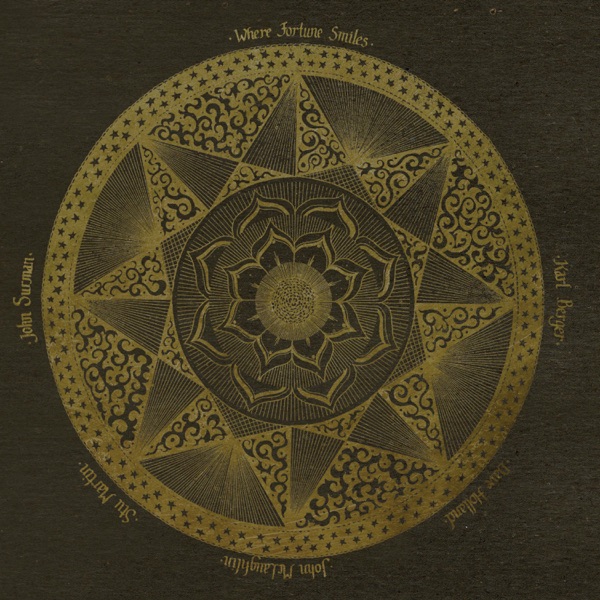
Where Fortune Smiles catches John McLaughlin at an interesting moment — still in his early thirties, already restless, not yet the fusion architect he'd become. He's here alongside John Surman on reeds, Dave Holland on bass, Karl Berger on vibraphone, and Stu Martin on drums. This isn't a McLaughlin-led showcase. It's genuinely collaborative, which means the guitar sits in the mix rather than leading from the front. That's worth noting because it tells you what kind of album this is: five people trying to find common language in free jazz without a safety net.
The session has that particular texture you get from 1970 free jazz — angular, skeptical of obvious resolutions, but not hostile to melody. Surman's tenor and soprano work through murky, questioning lines. Holland's bass is active and conversational, never just timekeeping. Berger's vibraphone adds an odd shimmer, something almost chamber-like beneath the abstraction. Martin keeps things propulsive without locking into groove. McLaughlin's guitar moves between punctuation and texture, sometimes fingerpicked quietly, sometimes searching for sharper angles. The album's modest length and no-frills production — just the players, clearly audible, nothing overdone — makes it feel like you're sitting in on a real session from that era, the kind that happened regularly in European clubs and studios before the music world decided what it wanted from these musicians.
This isn't essential McLaughlin or a logical entry point into his work. He'd go on to more distinctive and definitive recordings, especially once fusion took shape. But if you're curious about his approach to collective improvisation, or you want a straightforward example of how European free jazz sounded in 1970, this is solid and uncluttered. It's the kind of album that rewards patient listening without demanding reverence.
Who's playing
Where next?
More by John McLaughlin

My Goal’s Beyond 1971

Extrapolation 1969

Devotion 1970

Time Remembered: John McLaughlin Plays Bill Evans 1993
The musicians on this record
Their own records, close in time


