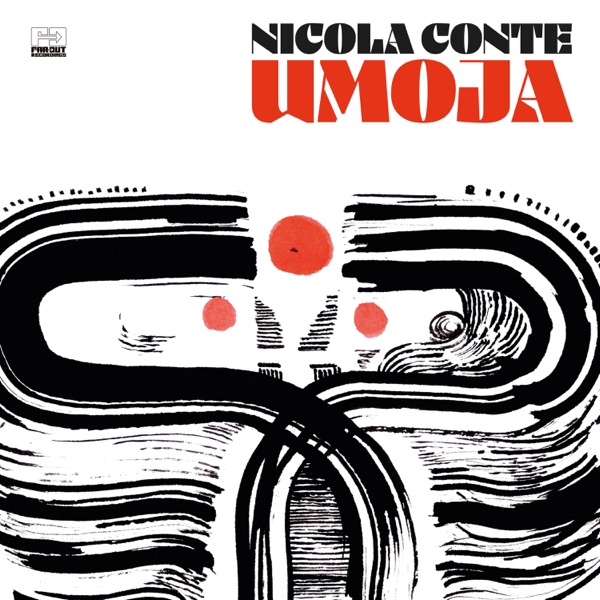
Conte's Collective Vision Comes into Focus
Umoja arrives as Conte's most deliberately collaborative statement, spreading compositional weight across an ensemble rather than anchoring everything to his own voice.
By 2023, Nicola Conte had spent nearly two decades establishing himself as a composer, arranger, and guitarist working largely within his own aesthetic — atmospheric, cosmopolitan, built on lean orchestration and meticulous detail. Umoja shifts that dynamic. The album's title means unity in Swahili, and the gesture matters: this is Conte stepping back into an ensemble conversation rather than leading from the front. The compositions are his, but they're written for specific voices and instruments that get genuine space to respond and develop ideas.
What distinguishes this from his solo work is the breathing room. Where earlier Conte albums sometimes felt like finished objects — precise, beautiful, complete — Umoja leaves gaps for Gianluca Petrella's trombone to settle in, for voices to echo and overlap, for rhythm sections to push gently against the arrangements rather than serve them. The production is warmer, less fastidious. You hear room tone, the slight lag of ensemble playing, choices that would have been smoothed away ten years ago. It's a more patient record, less concerned with surface polish than with how musicians inhabit space together.
This is not a reinvention or a departure—Conte's compositional DNA is instantly recognizable. But it does suggest a shift in what he values. The album landed well with listeners already committed to his work, and for anyone coming to him fresh, it's worth hearing before diving into his earlier, more hermetic recordings. It's a warmer entry point, one where the presence of other musicians feels like an invitation rather than an obligation.


