Tea Party Jazz with a Bass-Line Wonderland
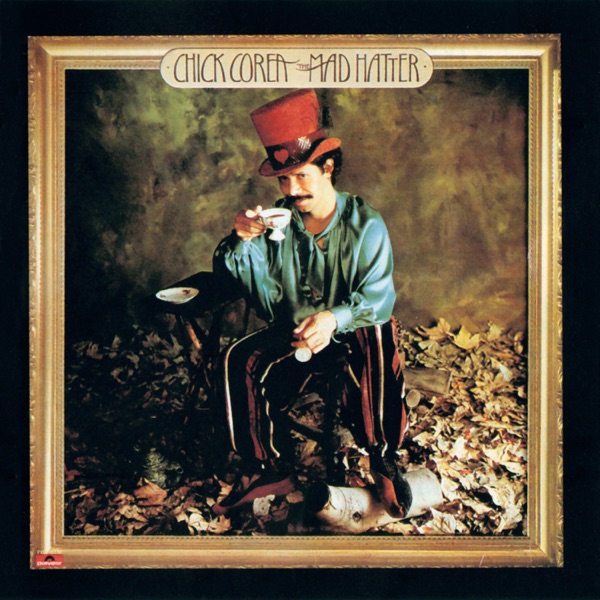
Chick Corea's Wonderland, where a stellar rhythm section keeps the Mad Hatter's party swinging.
The record's distinctive pulse comes from Steve Gadd on drums and Eddie Gomez on bass, two players whose time-feel gives Corea's Carroll-inspired concept its footing. Gadd in particular was among the most sought-after session drummers of the late 1970s, and his precise, slightly behind-the-beat approach keeps the more whimsical sections from floating off. Gomez, a veteran of Bill Evans's trio, anchors the harmonic shifts with a warm, forward tone that makes the album's wilder turns feel purposeful rather than random.
The album is a concept piece, built around Lewis Carroll's 1865 Alice's Adventures in Wonderland, and Corea uses his band to move between playful themes and more open, exploratory passages. Joe Farrell's flute adds a light, airy color that suits the Wonderland imagery, and the brass section, including trumpeter John Thomas and trombonist Ron Moss, gives the arrangements a bright, big-band lift in places. It is not Corea at his most austere, and the ambition sometimes outruns the material, but the rhythm section keeps it grounded.
For listeners coming to Corea, this is not the place to start. Start with Return to Forever (1972) or the trio records to hear his core voice. Mad Hatter is for those already following his path, who want to hear him playing with a concept and a larger ensemble. Critics have been mixed; The Penguin Guide to Jazz Recordings gave it 2.5 out of 4 stars, a fair assessment of an enjoyable but uneven record.
Who's playing
Jamie Fauntbass
Eddie Gomezbass
Chick Coreapiano
Stuart Blumbergtrumpet
John Rosenbergtrumpet
John Thomastrumpet
Ron Mosstrombone
Joe Farrellflute
Harvey Masondrums
Steve Gadddrums




