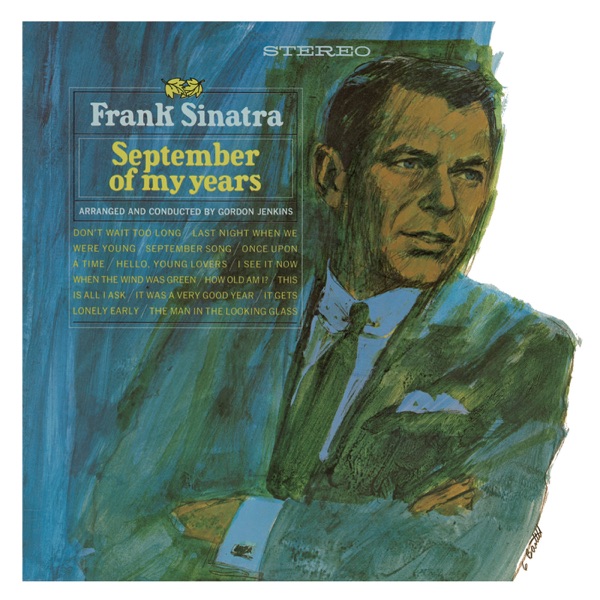
1954 · Album
Songs for Young Lovers
Capitol Records · Notable: First Sinatra album without 78 rpm multi-disc release; selected for National Recording Registry in 2002

Sinatra's Fresh Start at Capitol Records
His first album for Capitol showed Sinatra could still sound contemporary without abandoning what made him essential.
By 1953, Frank Sinatra had spent over a decade at Columbia Records, building a catalog that ranged from swoon-inducing ballads to uptempo swing numbers. Songs for Young Lovers marked his debut on Capitol Records, and it arrived as a deliberate shift in approach. The label packaged it as a 10-inch LP and as a 45 rpm EP set—formats that reflected the changing market—but notably declined to press it as a multi-disc 78 rpm set, the old standard that had defined album releases. That choice alone signals something: Capitol was thinking forward, and so was Sinatra.
The album itself is intimate, scaled for close listening rather than big-band swagger. These are love songs for people actually in love, or trying to be, with arrangements that give Sinatra space to breathe and shape a melody. He sounds relaxed here, less the crooner-for-the-masses and more like a guy who knows what he's doing and trusts his instincts. There's no wasted motion, no oversinging. The recording quality is clean and direct—Capitol's engineers knew their business—and you hear Sinatra's voice with clarity that earlier Columbia sessions sometimes lacked.
This is where to start if you want to understand what made Sinatra matter in the 1950s. It's not his best work—that came later—but it's essential and immediate. It's also historically interesting: the Library of Congress selected it for preservation in 2002, recognizing it as a turning point in how popular music got recorded and distributed. For casual listeners, this album sits at an ideal entry point: approachable, beautifully sung, and free from the kind of orchestral excess that can make vintage pop recordings feel dated. For Sinatra completists, it marks where his Capitol years began, and those years delivered some of his finest recordings.
Who's playing
Joe Comfortdouble bass
Al Hendricksonguitar
Allan Reussguitar
Mahlon Clarksaxophone
Skeets Herfurtsaxophone
Alvin Stollerdrums
Kathryn Julyeharp
Paul Robynviola
Paul Shureviolin
Eleanor Slatkincello
Felix Slatkinviolin
Bill Millercelesta