1998 · Album
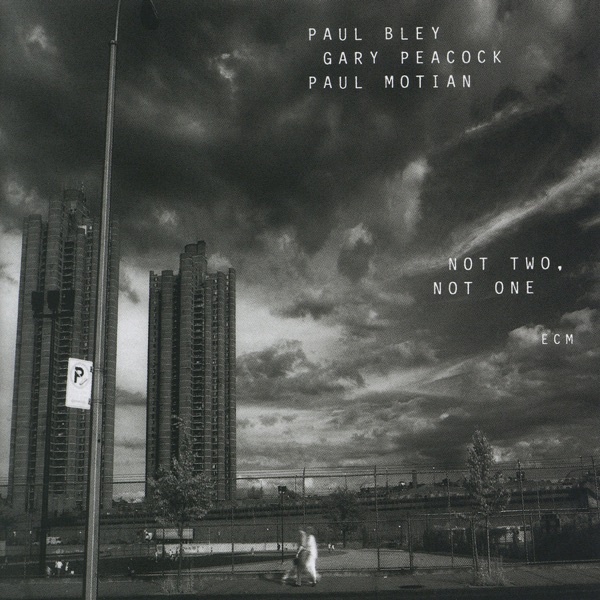
Not Two, Not One
Recorded 1959 · United Artists · Produced by Not documented
Piano and Silence in Conversation
Bley strips jazz down to its most honest exchange between musician and listener.
Not Two, Not One finds Paul Bley working in a stripped-down setting that lets you hear exactly what he's thinking in real time. This is solo piano jazz, which means there's nowhere to hide—no rhythm section smoothing over rough spots, no horns to carry the melody when inspiration flags. It's just Bley and the instrument, and that nakedness turns out to be exactly what this music needs.
What makes this record matter is how Bley uses space as much as notes. He'll play a phrase, then leave room for it to breathe and echo in your head before moving on. It's the opposite of the dense, chromatic complexity he'd explore later in his career. Here, at this moment, he seems interested in clarity—in letting listeners follow his ideas without getting tangled in technique. The pieces have a contemplative quality that feels less about impressing you and more about thinking out loud. You're overhearing a pianist work through his ideas rather than watching a performance.
If you know Bley mainly from his electric fusion work or his collaborations with other musicians, this will feel like a different person entirely. It's not a masterpiece that changed jazz history, but it's a genuine document of a musician in a particular headspace. It matters most if you're curious about the roots of his thinking, or if you just want to hear someone play piano without pretense. Start here if solo piano speaks to you; if you want Bley in a more energetic setting with other musicians, look elsewhere first.
Who's playing
Where next?
More by Paul Bley
All 15 albums →


The musicians on this record

Sound of Love 1997
Paul Motian
plays drums (drum set) here
plays drums (drum set) here

A Closer View 1998
Gary Peacock
plays bass here
plays bass here