Shearing's Quiet Mastery in the Nineties
A trio session where Shearing's touch was everything—restrained, exact, letting silence do the work.
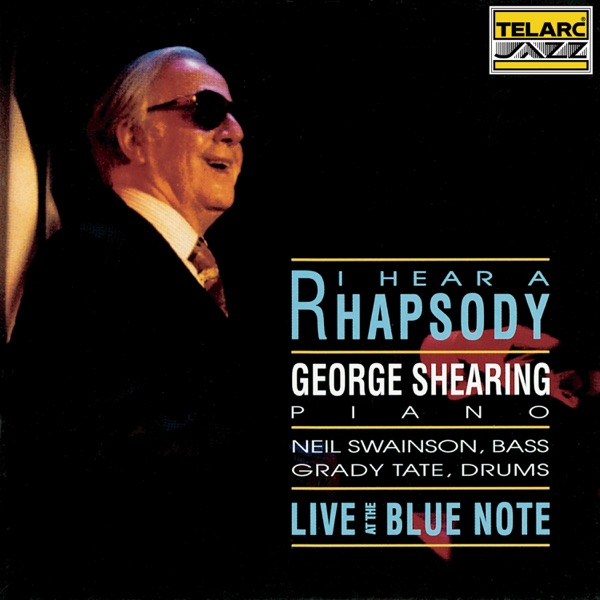
By 1992, George Shearing was in his eighties and no longer chasing commercial success. I Hear a Rhapsody arrived without fanfare, a modest trio date that caught few headlines at the time. The jazz world had moved on to younger voices, and Shearing had already built his legacy through decades of Capitol recordings and his famous quintet sound. What made this late-career record matter was its refusal to grandstand. Shearing, Neil Swainson on bass, and Grady Tate on drums recorded a set of standards with the kind of unhurried confidence that only comes from a lifetime at the piano. There was no need to prove anything anymore.
The album's strength lies in Shearing's playing. His touch had only sharpened with age—every note deliberate, every phrase shaped with the precision of someone who knew exactly what he was doing. The trio format strips away any excess. On these recordings, Shearing's comping and his solo lines carry the entire weight. Tate's drumming stays supportive and conversational, never rushing, and Swainson anchors without pushing. The interplay between the three is respectful and efficient, the sound of musicians who understood economy.
I Hear a Rhapsody stands as a solid late-career document from an artist who never needed to prove his worth. It's not a peak moment—that belonged to his Capitol years—but it captures Shearing doing exactly what he'd always done best: playing the piano with complete authority and restraint. For listeners already familiar with his earlier work, this offers a chance to hear him unbothered by trends, simply playing jazz the way he'd always known how.
Who's playing