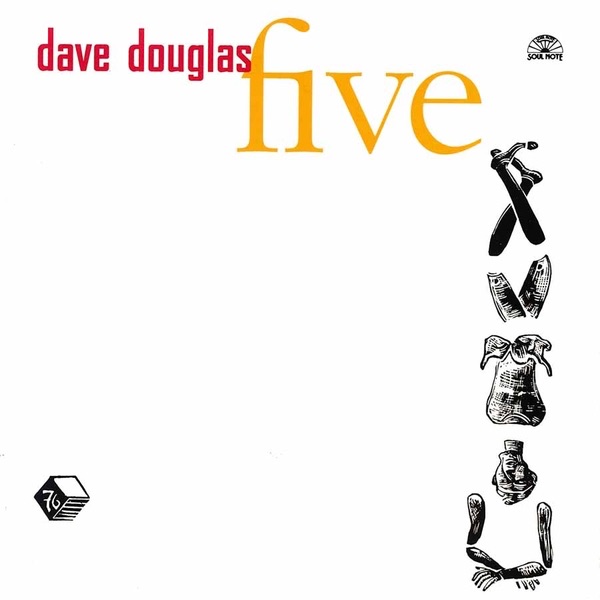
1996 · Album
Five
Recorded 1996 · Soul Note · Produced by Not credited in verified sources
Five Musicians, No Hierarchy, Pure Dialogue
All of the musicians function as equals, the interaction is often intuitive, and the improvising is on a high level.
The first thing you notice on Five (1996) is that Mark Feldman's violin doesn't sound like violin. It's raw, sometimes harsh, moving in sharp angles alongside Dave Douglas's trumpet rather than sweetening it. Feldman treats the strings as percussion and melody at once, which is the whole point of this group. Douglas had already explored this sound on Parallel Worlds (1993), but Five finds everyone sharper, more purposeful. The band — Douglas, Feldman, Erik Friedlander on cello, Drew Gress on bass, and Michael Sarin on drums — plays with the kind of equality you hear in free jazz ensembles, except the instrumentation pulls them in unexpected directions. There's no piano to anchor changes, no saxophone to carry a melody line. That responsibility bounces between trumpet, violin, and cello, and the rhythm section has to read the room constantly.
Allmusic reviewer Scott Yanow noted the group recalls Ornette Coleman's free-jazz approach despite having nothing in common instrumentally. That comparison holds because what matters here is the refusal of roles. Douglas doesn't lead in any traditional sense. Feldman's violin might take the ground one moment and float above the next. Friedlander's cello can be the deepest voice or the sharpest one. This is democratic in a way most jazz groups never achieve, which also means it demands absolute listening from everyone involved.
The Penguin Guide to Jazz Recordings gave it four stars. If you're comfortable with structured harmony and soloing over changes, this will feel abstract and unsettling at first. But Five is worth the discomfort—it's what happens when five strong players decide there's no safety in agreement, only in constant, intuitive negotiation.
Who's playing