Turner's Restless Search Across Modal Territory
Turner's labyrinthine lines and daunting harmonic language set him apart from today's young tenor stars.
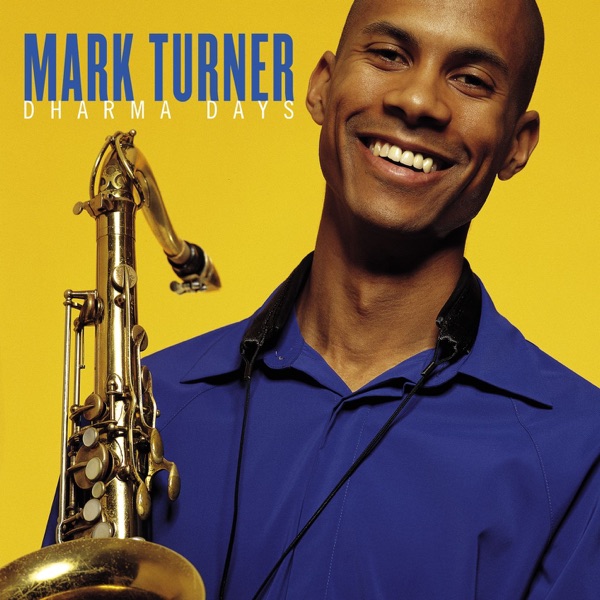
Dharma Days pulls you into a room where nothing settles. Turner's tenor arrives light and almost uninfected in the high ranges, then darkens as it descends, probing chords without quite landing on them. The quartet shifts constantly — texture changes, tempo shifts, sudden changes of direction — so you're never sure if you're listening to modal meditation or something closer to free improvisation. It has the feeling of a live performance captured in the studio, urgent and immediate in ways Turner's earlier records weren't quite managing.
This is Turner working through ideas that connect to early 1960s Blue Note explorations, the kind of harmonic restlessness you heard from younger players then. But he's not copying that era; he's asking similar questions from a new angle. The conceptual ambition is real — Turner isn't just soloing over changes, he's rethinking what the quartet can do together, how to move between modes, how to make harmonic language sound like thought rather than decoration.
All About Jazz reviewer David Adler caught something crucial: the album succeeds where Turner's earlier studio work sometimes hesitated, actually capturing a live intensity and a sense of discovery. The record confirms what was becoming clear by this point — Turner had something genuinely distinct to say, and he had the ear and the chops to say it.